Puppy Teething Symptoms: What's Normal and What Means a Vet Visit
Normal puppy teething symptoms are a short list: more chewing, a little drool, sore gums, a dot of blood on a toy, a tooth you never find. Fever, lethargy and diarrhea are not on it. Here is the triage, with the thresholds that mean call your vet instead.

Contains affiliate links · our policy

In this guide
- When Puppy Teething Symptoms Start and Stop
- Normal Puppy Teething Symptoms: The Short List
- Do Puppies Drool When Teething?
- Puppy Swollen Gums and Teething Bleeding: Where the Line Is
- Fever, Lethargy and Diarrhea Are Not Teething Symptoms
- Teething in Dogs: Symptoms That Mean Call the Vet
- What to Give Them to Chew Instead
- The Bottom Line
- Our Top Picks
- FAQ
Normal puppy teething symptoms are a short and fairly dull list: more chewing and mouthing, a little extra drool, sore gum lines, a dot of blood on a chew toy, a tooth you never find, and — by many owners' accounts — a puppy with a shorter fuse than usual. Fever, lethargy, vomiting and diarrhea are not on that list, and filing them under teething is the mistake that costs owners the most time.
We may earn a commission from links on this page, at no extra cost to you.
That is the whole triage. Below is the long version: what veterinary sources actually describe as normal in a teething mouth, what they describe as a reason to be seen, and where the line between the two sits. If you want the wider picture of this stage first, we cover what to expect during teething in the main guide.
When Puppy Teething Symptoms Start and Stop
According to VCA Animal Hospitals, dogs have 28 deciduous teeth and up to 42 permanent teeth, and at around 12 weeks the deciduous teeth begin to fall out while the permanent teeth erupt behind them. Normally, VCA says, all permanent teeth have erupted by six months of age. The AKC frames the same handoff as beginning when a puppy is about three to four months old, when puppy teeth start falling out to make room for 42 adult teeth.
So the symptom window you personally live through runs from roughly 12 weeks to six months. Anything dramatic outside that window is less likely to be teething at all. The week-by-week detail lives in the puppy teething timeline.
One framing note before the lists. Teething is a plausible explanation for mild discomfort in a 14-week-old puppy. It is not a diagnosis, and it is never a reason to wait out something that looks like actual illness.
Normal Puppy Teething Symptoms: The Short List
Here is what is well documented, and what we would not lose sleep over on its own.
- More chewing and mouthing. VCA Animal Hospitals notes that chewing seems to alleviate what is assumed to be the discomfort associated with the teething process. An escalation here is the most reliable sign you will get.
- A little extra drool. The AKC says that when teething occurs, you might notice the puppy drooling, or see little spots of blood on their toys.
- A dot of blood on a toy. VCA is specific about the amount: it is not unusual for some bleeding to occur when the teeth are falling out, but the amount is minuscule and noticeable only as mild red staining on a chew toy.
- Sore gums. The AKC describes the teething process as very uncomfortable, with sore gums. Mild redness or puffiness along a gum line where a tooth is pushing through is something many owners notice, and we would not read much into it by itself.
- A tooth in the carpet, or no tooth at all. VCA says you may find deciduous teeth on the floor, but more likely your puppy will harmlessly swallow them while eating. Most owners never find a single one, and that is normal.
- Slightly slower or messier eating. A puppy picking at a bowl for a day, or working more slowly through kibble, is a common report at this stage. Outright refusing meals is a different thing, and we have put it in the vet-visit list below.
- A shorter fuse. Plenty of owners describe more irritability and restlessness in this window. We have not found a veterinary source that quantifies it, so treat it as an impression rather than a symptom with a clean threshold.
Do Puppies Drool When Teething?
Some do, and mild drool inside that 12-week-to-six-month window is unremarkable. The AKC lists it as one of the two things you might notice when teething occurs, the other being those blood spots on toys.
The version that changes our answer is drool that arrives suddenly and heavily, particularly with company. VCA Animal Hospitals lists excessive drooling alongside difficulty eating and dropping food, disinterest in eating, pawing at the mouth, head shaking and jaw chattering as signs of a painful tooth in a young dog. One of those on its own may be nothing. Three of them together is a phone call.
Puppy Swollen Gums and Teething Bleeding: Where the Line Is
VCA's wording is the most useful yardstick in this whole article, because it gives you a quantity instead of an adjective: minuscule, visible only as mild red staining on a chew toy. Pink dots on a rope toy fit that description.
What does not fit: blood you can see flowing, blood that soaks a toy or bedding, or bleeding that keeps coming back to the same spot. None of that tells you what is wrong, but all of it is a reason to have the mouth examined rather than to keep handing over chews.
The same logic applies to swelling. General pinkness where teeth are erupting is one thing. A lump or a swollen patch in one specific place is another, and it has explanations beyond teething: PetMD lists swelling or redness of the gums among the signs of a tooth root abscess in dogs, alongside facial swelling and the presence of a broken or discolored tooth. Take a photo while you can see it, because these things have a way of looking fine in the exam room.
Fever, Lethargy and Diarrhea Are Not Teething Symptoms
This is the most common thing we see owners get wrong, and it is worth being blunt about.
Fever. We could not find an authoritative veterinary source that lists fever as a sign of teething. The AKC puts a dog's normal temperature range at 99.5 to 102.5 degrees F and says a dog is considered to have a fever at 103 degrees or higher, at which point it is time to head to the vet's office. The AKC also notes that fever appears among the symptoms of serious puppy illnesses, including parvovirus and canine influenza. A hot, miserable 15-week-old puppy needs a thermometer and a vet, not a frozen toy.
Lethargy. The AKC lists lethargy or lack of energy as a sign of fever in dogs. VCA Animal Hospitals is direct about what to do: if your puppy is lethargic, refusing food, vomiting or has blood in their stool, do not try to deal with this at home, and take them to the veterinarian right away. Teething may make a puppy cranky. We would not accept it as the explanation for a puppy who has gone flat.
Diarrhea and vomiting. Same answer. VCA advises a veterinary visit if diarrhea persists more than two days, and immediate care if it comes with lethargy, food refusal, vomiting or blood. VCA's puppy diarrhea guidance does not mention teething at all, and points instead at what puppies get into, so diet is the first place we would look. We have a separate piece on whether puppy food can cause diarrhea if a recent food change is in the picture.
The AKC makes the general point well in its own teething guidance: if you notice anything unusual, talk to your veterinarian, since the symptoms could also be related to a more serious issue.
Teething in Dogs: Symptoms That Mean Call the Vet
None of the following is a diagnosis, and none of them means something is definitely wrong. Each is a reason to get the mouth looked at rather than to assume teething and wait.
- A baby tooth still there once the adult tooth is through. VCA Animal Hospitals calls this a persistent, or retained, tooth, and says the upper canines are the most common, followed by the lower canines and then the incisors. Small breeds and brachycephalic breeds such as bulldogs, pugs, Boston terriers and boxers are over-represented. VCA explains that the doubled-up teeth crowd the mouth, trap food debris and can drive tartar, gingivitis and periodontitis, and that extraction requires general anesthesia and should happen promptly, because early extraction usually lets the adult tooth move into its proper position. VCA suggests checking the mouth weekly until about seven to eight months of age. The AKC's advice is the same in one line: if you notice any baby teeth remaining, tell your veterinarian, as they may need to be removed.
- A fractured or chipped tooth. VCA says a broken tooth is painful and that your first step is to speak with your veterinarian. Even an uncomplicated fracture exposes dentin, which VCA notes is sensitive tissue, so it still hurts. A fracture deep enough to expose the pulp is more urgent still.
- A tooth that has changed color. PetMD includes the presence of a broken or discolored tooth in its list of tooth root abscess signs, and notes that dental x-rays are needed for diagnosis. A grey, pink or brown tooth is not something you can assess by looking, and it is not a teething stage.
- Real bleeding rather than a spot. Measured against VCA's minuscule, anything more is worth a call.
- Facial swelling. PetMD describes facial swelling, often below the eyes or along the lower jaw, as a sign of a tooth root abscess, and says that if you suspect one you should take your pet to the veterinarian immediately, because the pain and infection can make it a medical emergency.
- Refusing food. The AKC is clear that puppies get less rope than adult dogs here: any missed meal may be concerning, and a young puppy that does not want to eat more than one meal should be seen by a veterinarian right away. A teething puppy who is not eating is a question we get constantly, and the honest answer is that teething is a weak explanation for genuine food refusal.
- Bad breath that keeps getting worse. PetMD lists halitosis among tooth root abscess signs. A puppy-breath smell that is getting steadily fouler, rather than fading, deserves a look.
- A bite that looks wrong. VCA defines malocclusion as abnormal tooth alignment, and notes that one specific form of it — a lower canine tipped inward toward the tongue — is often due to persistent deciduous canine teeth. VCA describes correction options including moving the tooth, crown reduction and restoration, or extraction. The version we would flag fastest is a lower canine that looks aimed at the roof of the mouth: VCA notes that a persistent baby canine can push the permanent canine into contact with the roof of the mouth, causing pain and interference.
- Obvious mouth pain. VCA's list for a young dog with a toothache covers difficulty eating and dropping food, disinterest in eating, pawing at the mouth, head shaking, jaw chattering and excessive drooling, and notes that most causes of toothaches in young dogs require professional dental intervention along with prescribed pain medication.
Your vet can usually narrow these down with an oral exam, and with dental x-rays where they are needed — PetMD notes those have to be taken under general anesthesia. We would rather you make a call that turns out to be nothing than talk yourself into teething for three weeks.
What to Give Them to Chew Instead
Two rules cover most of this, and both come from vets rather than from us.
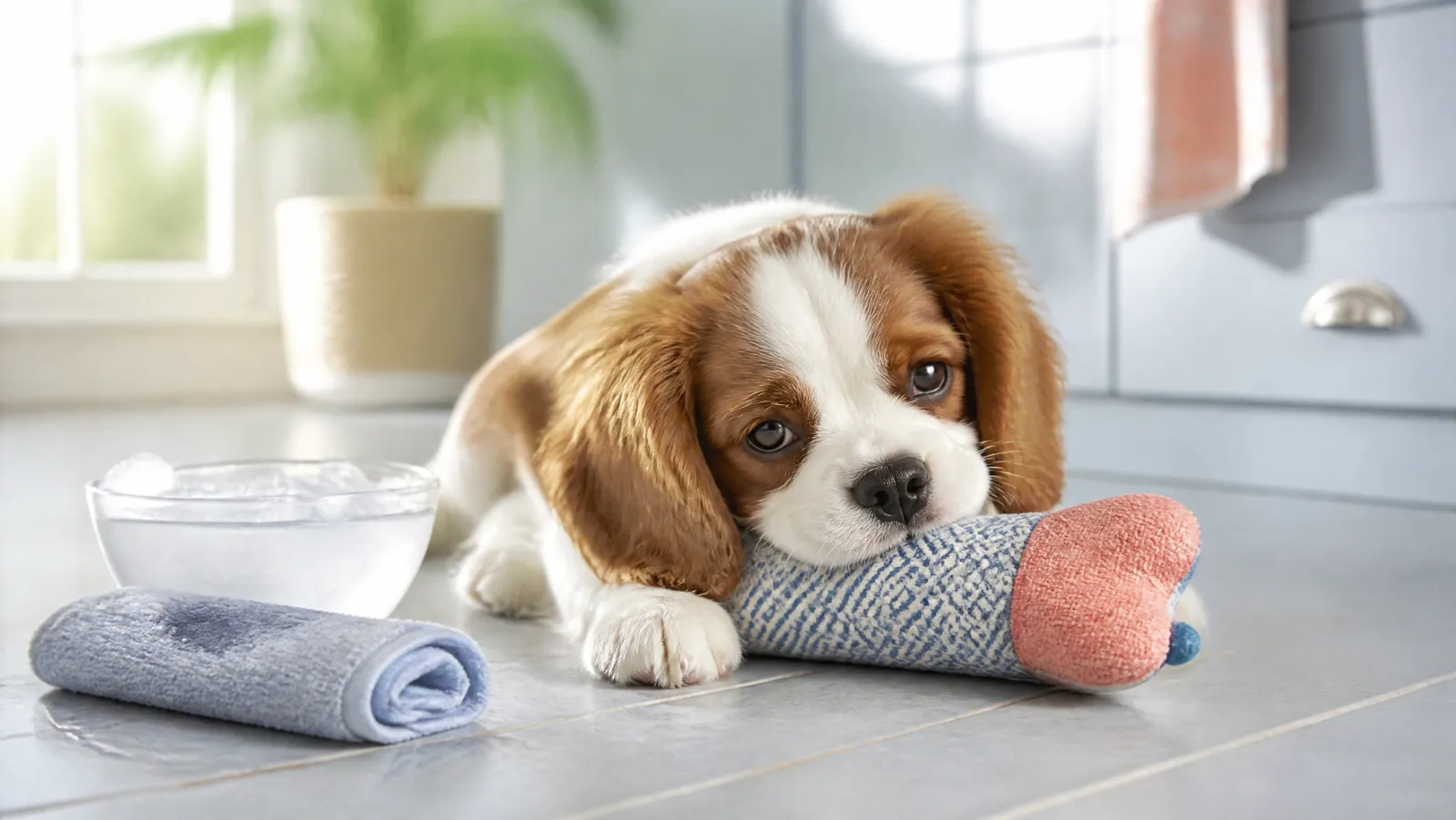
The first is VCA's summary of what veterinary dentists often advise: do not let your dog chew anything that will not bend. The second is PetMD's version of the same idea with a test attached. PetMD says to stay away from very hard toys or bones, specifically ones so hard you cannot indent them with your fingernail, because they can lead to broken teeth. PetMD also advises against ice cubes, which it describes as very hard on teeth and not recommended for a puppy, while noting that frozen toys and treats do help soothe a teething puppy's gums. Chilled, yes. Frozen solid and rock-hard, no.
With that filter in place, two inexpensive options:
The Nylabone Puppy Chew Teething Ring Bone is the one we would reach for first in the sore-gum stage, at about $3 as of October 2026. It is made in Nylabone's soft puppy material and can be chilled for extra relief. Read the limits as seriously as the features, though: Nylabone states this material is for teething puppies with gentle chewing styles and is explicitly not intended for powerful chewers or puppies with adult teeth, and the X-small size is rated for puppies up to 15 pounds. When the adult teeth arrive, this one retires.
For the puppy who wants to consume something rather than gnaw a toy, the N-Bone Puppy Teething Rings run about $7 as of October 2026 for a pack of six. They are edible and fully digestible, with no plastic and no rawhide, and N-Bone designed them for puppies three months and older, which rules them out for a younger pup. Being edible cuts both ways: it is a consumable, so six rings do not last long, and we would supervise as you would with any chew.
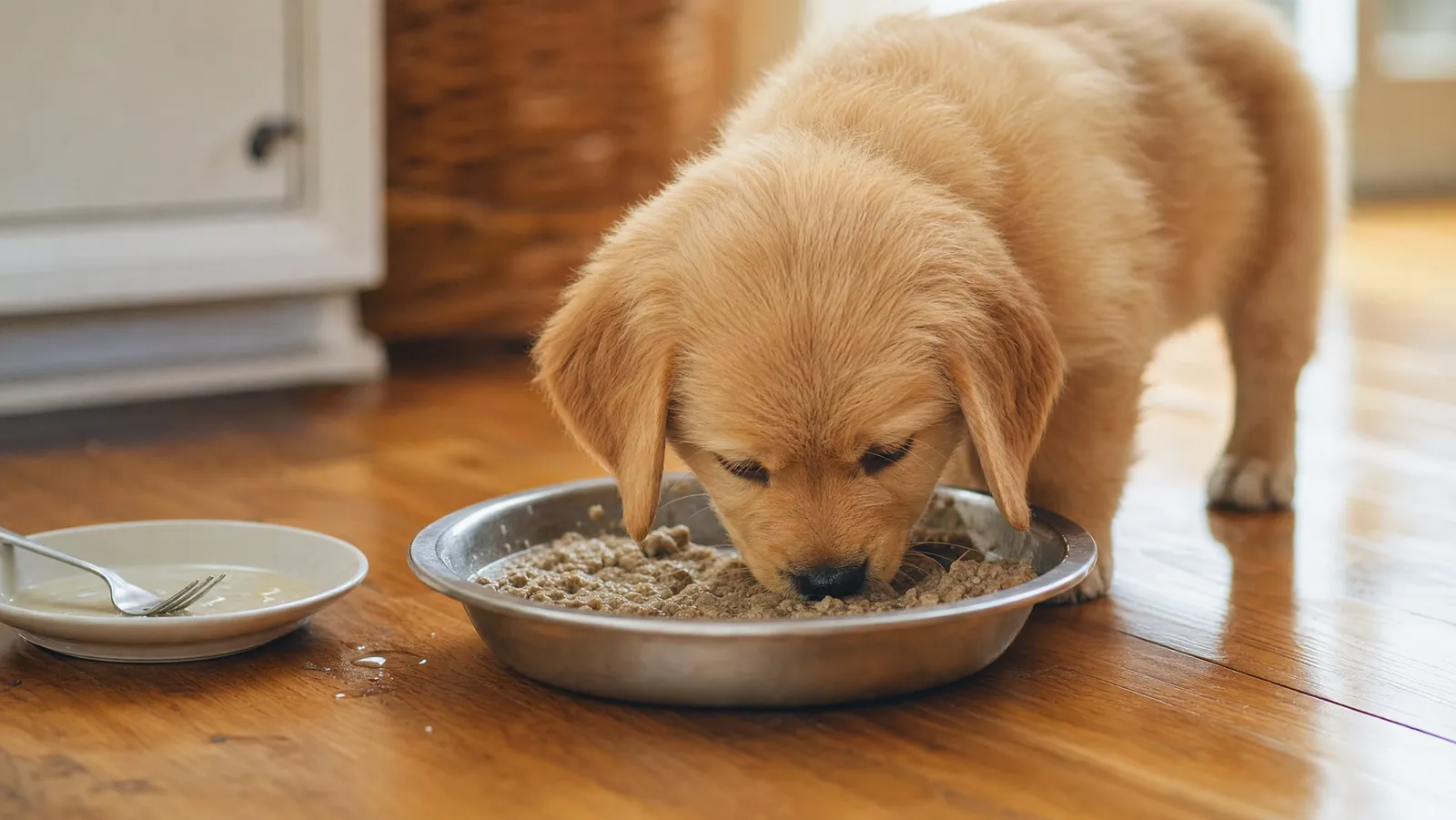
If food is the harder problem right now because a sore mouth has made kibble unappealing, softening puppy food is the cheaper first move. We also have a fuller walkthrough of how to soothe a teething puppy, and a round-up of the best puppy teething chews is on the way.
The Bottom Line
Normal teething is boring: chewing, drool, sore gums, a trace of blood, a missing tooth nobody ever finds, and a slightly grumpier puppy for a few months. Hold that list in your head and the exceptions get easy to spot.
The exceptions are the ones worth acting on. A baby tooth still sitting beside its adult replacement, a broken or discolored tooth, swelling in the face, real bleeding, refusing meals, breath that keeps getting worse, a bite that looks off, or a puppy with a fever, diarrhea or no energy. Those are reasons to call, and none of them is improved by waiting.
For the training half of this stage, where those needle teeth end up on your hands, start with why your puppy bites you. And for the whole stage in one place, from the first loose incisor to the last molar, read Healthy Puppy Review's complete teething and biting guide.
Our top picks

A ridged, chicken-flavored ring in Nylabone's soft puppy material, built for the stage when the gums are sore and the chewing style is still gentle. Nylabone says it can be chilled in the freezer for extra teething relief, which is the cheapest trick in this guide.
What we love
- Ridges and nubs intended to soothe sore gums while helping clean teeth
- Freezer-friendly, per the maker, for extra relief
- Chicken flavor is infused throughout
Keep in mind
- Nylabone states it is not intended for powerful chewers or puppies with adult teeth
- X-small size is rated only for puppies up to 15 pounds

An edible, fully digestible ring with no plastic and no rawhide, which makes it a reasonable answer for the puppy who chews a toy for ten seconds and then wants something to actually consume. N-Bone says the texture helps soothe sore gums and adds calcium and DHA omega-3.
What we love
- Edible and fully digestible, with no rawhide
- Ring shape is easier for small paws to hold than a bone shape
- Enriched with calcium and DHA omega-3
Keep in mind
- It gets eaten, so six rings is a consumable rather than a lasting chew
- N-Bone designed it for puppies three months and older, so it is not an answer for a younger pup
Frequently asked questions
What are the first signs of puppy teething?
The earliest thing most owners notice is a jump in chewing and mouthing. VCA Animal Hospitals says chewing appears to relieve what is assumed to be the discomfort of teething, and the AKC notes you might see the puppy drooling or find little spots of blood on their toys. Gaps where teeth have come out, and the occasional tiny tooth on the floor, follow. VCA places the start of the shedding stage at around 12 weeks of age.
Do puppies drool when teething?
Some do. The AKC specifically mentions drooling as something you might notice when teething occurs, alongside small blood spots on toys. Mild, intermittent drool during the 12-week to six-month window is unremarkable. Drool that starts suddenly and heavily, especially with pawing at the mouth, head shaking or dropped food, is on VCA Animal Hospitals' list of signs of a painful tooth, and that is worth a call rather than a wait.
Is it normal for a puppy's gums to bleed while teething?
A trace of it is. VCA Animal Hospitals puts it plainly: it is not unusual for some bleeding to occur when the teeth are falling out, but the amount is minuscule and noticeable only as mild red staining on a chew toy. That is the yardstick. Blood you can see flowing, blood that soaks a toy or bedding, or bleeding that keeps returning to one spot is a reason to have the mouth examined.
Can teething cause a fever or diarrhea in a puppy?
Treat both as separate problems. The AKC puts a dog's normal temperature between 99.5 and 102.5 degrees F and says 103 or higher counts as a fever and means a trip to the vet. VCA Animal Hospitals advises that a lethargic puppy, one refusing food, vomiting or passing blood should be seen right away, and that diarrhea lasting more than two days warrants a visit. Teething is not a reason to wait.
What are retained puppy teeth and why do they matter?
VCA Animal Hospitals defines a persistent, or retained, tooth as a baby tooth still in place when the permanent tooth erupts. The upper canines are the most common, and small and short-nosed breeds are over-represented. VCA explains the doubled-up teeth crowd the mouth, trap food and can push the adult tooth out of position, and that prompt extraction under general anesthesia usually lets the adult tooth settle correctly.
About the author
James Martin
I'm an animal lover through and through. I grew up with dogs, my family always had at least one pet, and today I share my home with a rescue who is the love of my life. I started Healthy Puppy Review to help owners cut through the marketing noise and make confident, well-researched choices about their dog's health and happiness.