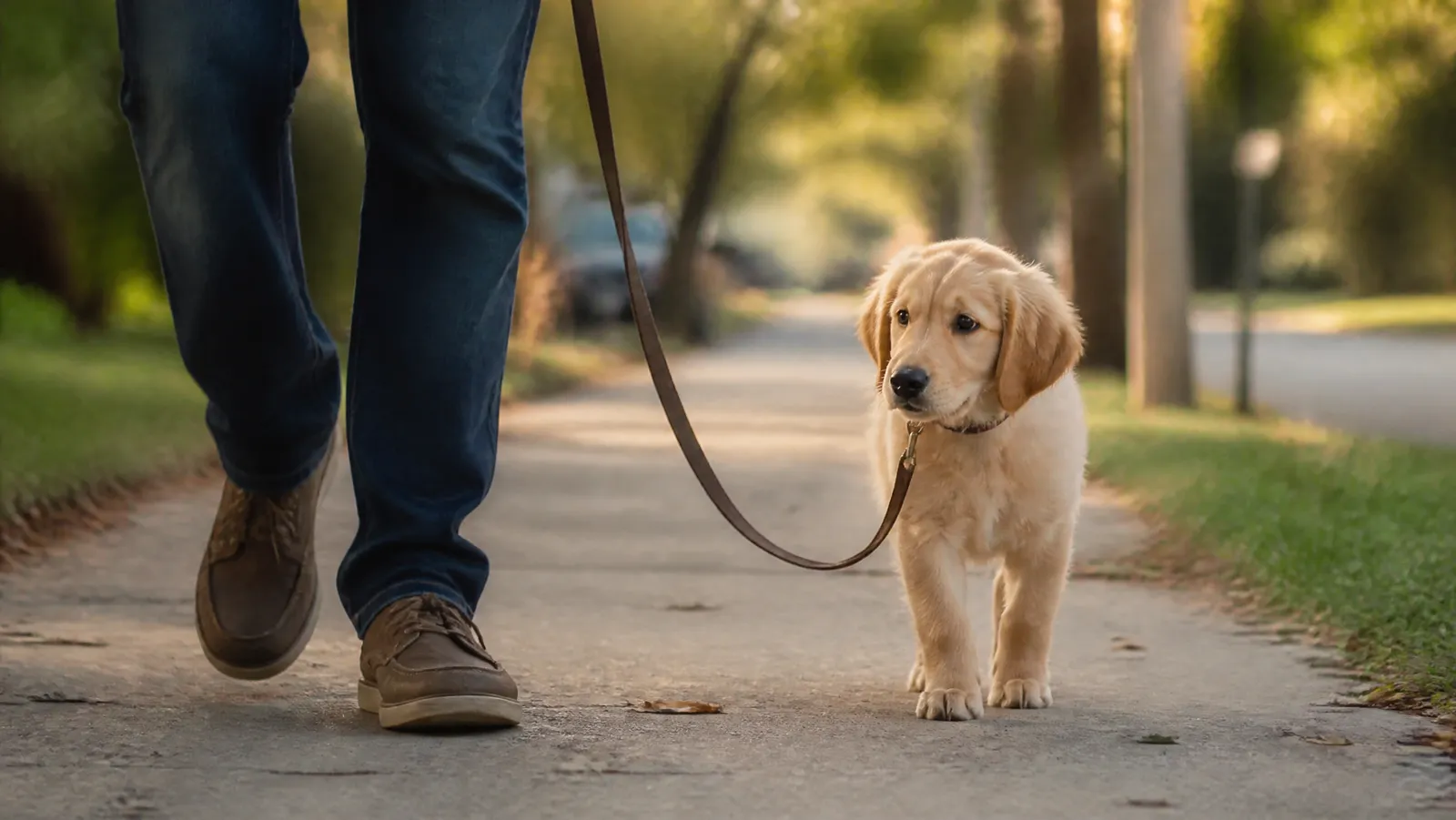
Puppy Pulling on the Leash? Here Is How to Stop It
Pulling works, which is why your puppy does it. Leash training a puppy that pulls means making tension stop the walk and slack pay — while a front-clip harness buys you a survivable walk today. Here is why it happens, the three drills that change it, and what the no-pull harness evidence actually shows.

Contains affiliate links · our policy
In this guide
Leash training a puppy that pulls comes down to one rule: tension stops the walk and slack pays. Pulling works, which is why your puppy does it, so your job is to make it stop working while you reward the position you actually want. A front-clip harness makes today's walk survivable. The training is what changes the behaviour.
We may earn a commission from links on this page, at no extra cost to you.
That split — management now, training over weeks — is what most advice on this problem blurs. A no-pull harness gets sold as a cure, the owner buys one, the puppy pulls slightly less hard, and nothing is learned. If you are starting from the beginning rather than troubleshooting a puppy who already drags you down the street, the full leash training guide covers the indoor groundwork this article assumes you skipped.
Why Your Puppy Pulls (It Is Not Defiance)
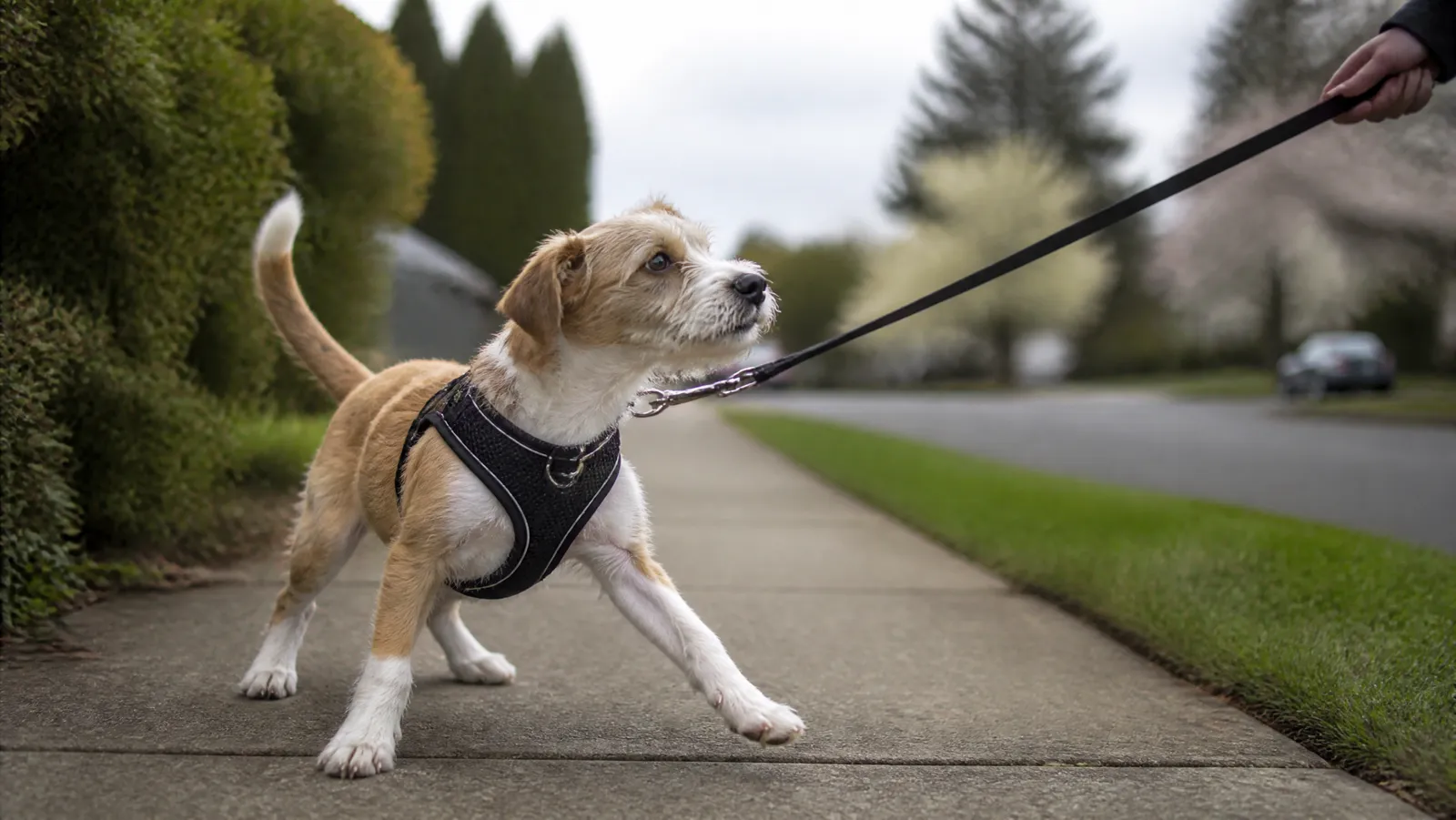
The explanation is boring, which is good news, because boring problems have reliable fixes. The AKC states the motive in one line in its guide to leash issues: "Your dog wants to walk – that's why they're pulling you in the first place." To your puppy, the leash is just the thing that gets tight while the interesting smell is still forty feet away.
So every walk is a training session whether you meant it or not. The puppy leans, you follow, and leaning gets rewarded. Do that for three weeks and you have taught a skill thoroughly — just not the one you wanted. The AVSAB's position statement on dominance theory makes the general version of the point: "Most undesirable behaviors in our pets are not related to priority access to resources; rather, they are due to accidental rewarding of the undesirable behavior." It adds that such behaviours persist partly "because alternate appropriate behaviors have not been trained instead."
That is also why we are not going to talk about who is the boss. The AVSAB recommends that veterinarians not refer clients to trainers who coach and advocate dominance hierarchy theory and the confrontational training that follows from it, and says training should instead follow the scientifically based guidelines of positive reinforcement, operant conditioning, classical conditioning, desensitisation and counter conditioning. A puppy towing you toward a lamppost is not bidding for rank. It wants the lamppost.
You will also meet the opposition reflex, the tendency to lean into steady pressure. Hold it loosely: it is practitioner shorthand whose usual pedigree is Pavlov's "freedom reflex" rather than any measurement of dogs on leashes, and trainers who use the term disagree about whether it is a true reflex at all. The reinforcement account does all the work you need.
Management vs Training — The Distinction That Fixes This
The one-line version
Management changes today's walk. Training changes every walk after that. You need both, and buying only the first is why so many owners are still being towed in March.
Management is everything that reduces the damage without requiring the puppy to learn: the harness, a shorter route, crossing the road to avoid the dog who sets your puppy off, walking at 7am instead of 5pm. None of it is cheating — an owner being dragged off their feet is in no position to mark and reward a loose line.
Training is the slow part — the rate of reward, the consistency across everyone who holds the lead, the willingness to stand still on a pavement looking foolish. Nothing you buy substitutes for it.
Gear gets sold as training, and that is the trap. Judge gear on whether it makes today's walk manageable and comfortable; judge your training on whether the leash is loose next month.
The Management Half: What to Put On Them Today
The front clip is the honest answer here. Moving the leash attachment to the chest means a pull turns the puppy sideways rather than giving them something to lean into, which can take a walk from impossible to merely annoying.
Our pick is the PetSafe Easy Walk, about $19 as of October 2026. PetSafe says it was created by a veterinary behaviorist in 2004 as a training aid, that its patented martingale loop applies gradual pressure to the shoulders, and that resting across the chest rather than the throat stops the gagging and choking a dog gets from pulling in a collar. Two honest limits from the listing itself: this is the Medium, so a very small puppy needs a smaller size, and it is a training harness with a chest clip only, not a two-clip everyday vest.
If you want one harness for both jobs, the rabbitgoo two-clip harness is about $17 as of October 2026 in the Small. rabbitgoo says the front clip creates a gentle redirection force to reduce tugging while the back clip suits casual walks, and four adjustable straps leave room for growth. It goes on over the head, which head-shy puppies object to, and the Small starts at a 13.8 inch chest. For the longer shortlist see the best puppy harnesses; if you are still choosing between a collar or a harness, that comparison argues both sides.
What the evidence supports, stated carefully. The research is thin and it cuts both ways. Dowdeswell and Churchill, in a 2024 paper in the undergraduate research journal Reinvention, filmed 30 pet dogs walking a four-metre walkway in six harness styles plus a collar. Every harness significantly reduced shoulder extension compared with the collar, and the front clip was, in their words, "the only harness that significantly reduced all four angles measured." The authors list their own limits: 30 dogs cannot separate breeds, one researcher measured the angles by hand, and only walking gait was assessed. Nothing in the paper links a harness to an injury in a pet dog.
Pointing the other way, Shih and colleagues, in Frontiers in Veterinary Science in 2021, put 52 shelter dogs on a leash tension metre and found maximal tension, mean tension and pulling time were all greater in a back-connection harness than in a neck collar when the dogs were attracted with food. A back clip is not automatically the gentler choice for a dog who already hauls.
Our reading: a well-fitted front clip while you train, off at home, and treated as a short-term tool rather than permanent hardware.
The lead matters less than people think, as long as it is not a retractable. A plain six-foot flat lead is about $4 as of October 2026, and PetSafe notes its nylon leashes pair with training aids like the Easy Walk. Its limitation is the webbing: 3/8 inch, no padded handle, so it can bite into your palm if a bigger puppy lunges.
Head collars come up here, and we would not start with one on a young puppy. The UC Davis veterinary medical teaching hospital's head halter handout recommends introducing a halter through desensitisation and counter-conditioning over several sessions with treats, and warns against yanking the collar or suspending the dog by it — more careful conditioning than most four-month-olds need.
The Training Half: Three Drills That Change the Behaviour
Three drills, about five minutes each, on ordinary walks. Measure sessions in minutes and rate of reward, not distance. Treats have to be within reach of one hand, because a reward that arrives after you wrestle a bag open pays whatever the puppy did next — the heouvo magnetic pouch is about $10 as of October 2026 and closes itself between grabs, though silicone holds food odour and needs washing.
- 1
Stop and wait (make tension useless)
The moment the line goes tight, stop. The AKC's instruction is exact: as soon as your dog pulls, stop, plant your feet and wait for a slack leash — it should hang in a J-shape — and for your dog to turn their attention back to you. At that moment, the AKC says, praise and reward with a treat at your side, then continue the walk. Say nothing while you wait: no cue, no tug, no repeated name. The only information your puppy needs is that tight equals stationary.
- 2
Pay the position (give them something to do instead)
Stopping removes the payoff for pulling but does not tell the puppy where to be, so pay the spot beside your leg, early and often. In the first week we would feed every two or three steps while the line is loose, delivered at the seam of your trousers rather than in front of your knee, because a treat held forward can teach forging. A loaded treat pouch on your hip is what makes that rate possible. This is the drill owners skip — we cover teaching loose leash walking from scratch in full separately.
- 3
Change of direction (make you worth watching)
When your puppy commits to a direction you are not going, turn and walk the other way, and reward them as they catch up. Ontario SPCA shelter training notes describe exactly this: change direction when the dog pulls ahead, encourage them verbally, then mark with a "yes" and treat when they follow. Best Friends Animal Society explains the mechanism — a change of direction puts the dog behind you, and as they come around, praise and a treat get their focus back. Turn with your feet, never the leash: the line goes slack because you moved, not because you pulled.
One more habit alongside the drills. The AKC recommends life rewards — "day-to-day things your dog enjoys like the chance to sniff a shrub or greet a stranger" — with a usable rule: if your dog walks ten feet without pulling, release them to sniff for a few minutes. Sniffing becomes the wage for polite walking rather than an interruption.
What Not to Do
No aversive hardware, and no corrections. The AVSAB's 2021 humane dog training position statement is unambiguous: evidence supports the use of reward-based methods for all canine training, there is no evidence that aversive training is necessary, and "the application of aversive methods – which, by definition, rely on application of force, pain, or emotional or physical discomfort – should not be used in canine training." Asked what to avoid, it names tools involving pain — choke chains, prong collars, electronic shock collars — along with intimidation and "physical correction techniques (leash jerking, physical force)." Leash jerking is on that list by name, which matters, because it is still widely recommended online for this exact problem. We use none of it. Nor do we pull back on a tight leash by hand: a puppy leaning into your pull is getting the tug-of-war they wanted. Stand still and let the line go quiet instead.
Do not use a retractable lead on a puller. It pays out line when the dog pulls, rewarding the pull every time, and makes a loose J-shaped leash impossible to spot. A fixed flat lead at about $4 as of October 2026 is the cheaper and better tool.
Do not count on tiring them out first. The idea that an exhausted puppy stops pulling is widely repeated, and we could not find a study testing it against leash pulling. Practitioner experience points the other way: Whole Dog Journal's write-up of hyperarousal describes dogs who stay in a chronic state of physiological arousal and cannot settle even in a crate. Treat that as experience rather than proof — but do not build your plan around a pre-walk sprint.
Do not escalate over a puppy biting the leash. It may mean the puppy is over threshold, so shorten the session rather than raise the stakes. The same machinery drives puppy biting indoors, and a legal chew in your pocket solves more of it than any telling-off — our must-have toys for a new puppy roundup is a reasonable place to start.
How Long This Takes
Longer than one weekend, and we will not put a number on it, because we do not know your puppy or how many people in your household are currently letting the pulling work. Expect weeks of short daily sessions, and expect to be the inconsistent one before your puppy is.
Expect a dip, too. Asher and colleagues, in a 2020 study of 69 guide dog candidates reported by Newcastle University, monitored the dogs at five months and again at eight months, during puberty. At eight months the odds of a dog repeatedly failing to respond to its caregiver's sit cue were higher than at five months, while the response to a stranger's cue showed no such drop. Caregivers rated the dogs less trainable at eight months; trainers who knew them less well did not.
The adolescent dip is normal, and it is the worst moment to get tough
If the puppy who walked nicely at five months is hauling again at eight, you are probably in that window rather than failing. The study's lead author advised owners not to punish dogs through this period, because it is likely to make problem behaviour worse. Keep the rate of reward high, shorten the walks, keep the front-clip harness on, and wait it out.
The Bottom Line
Separate the two halves and this becomes manageable. Put a well-fitted front-clip harness on today so walks stop being a fight, and understand what you bought: leverage, not learning. Then do the dull work — stop when the line goes tight, pay the spot beside your leg every two or three steps, turn with your feet when your puppy commits to the wrong direction, and let sniffing be the wage for a loose leash.
One rule the whole household has to be able to repeat: when the leash goes tight, nobody moves. It costs nothing, follows the AKC's own instruction, and keeps working long after the harness has been outgrown. For the groundwork underneath all of it — the indoor stage, the marker word, the first trip down the street — our puppy leash training guide is where to go next.
Our top picks


The front-clip design trainers commonly reach for. PetSafe says the Easy Walk was created by a veterinary behaviorist in 2004, and that its patented martingale loop puts gradual pressure on the dog's shoulders while the front leash attachment lets you guide the dog rather than haul on them. Because the strap rests across the chest instead of the throat, PetSafe says it stops the gagging and choking a dog gets from pulling in a collar.
What we love
- Front attachment turns a lunge into a turn, which is what makes today's walk manageable
- Rests across the chest rather than the throat, which PetSafe says prevents gagging and choking
- Less coverage than most harnesses, so PetSafe calls it lightweight and very breathable
- Quick-snap shoulder straps and a different-coloured belly strap that PetSafe says make it simple to put on
Keep in mind
- This listing is the Medium, so a very small puppy needs a smaller size or a different harness — PetSafe is emphatic about measuring to its chart rather than guessing
- It is a training harness with a front clip only on the chest, not a two-clip everyday vest
Two metal leash points instead of one. rabbitgoo says the front clip creates a gentle redirection force to reduce tugging during walks and training, while the back clip is for casual walks with a dog who is already walking politely — which is the flexibility we want while a puppy is still learning. Breathable mesh and soft padding spread the pulling pressure, and four adjustable straps leave room to grow.
What we love
- Two sturdy metal leash loops, so one harness covers training walks and relaxed walks
- Four fully adjustable straps that rabbitgoo says leave room for growth
- Bright reflective strips for early mornings and dark evenings
- A top handle rabbitgoo says lets you hold a pulling dog immediately, and doubles for car rides
Keep in mind
- It goes on over the head, which some head-shy puppies object to at first
- The Small starts at a 13.8 inch chest, so it will be loose on a brand-new toy-breed puppy

The unglamorous thing that decides whether the drills below actually happen. Two built-in magnets hold the mouth shut between grabs, which heouvo says allows one-hand operation so you can reach a reward quickly, and the food-grade silicone the maker states is free from bisphenol takes wet or frozen food as well as dry kibble. A training clicker comes in the box.
What we love
- Magnetic one-hand access, so you can pay the puppy without stopping to unzip anything
- Compact 5 by 4 by 2 inch body that the maker says holds 1.67 cups of dry or wet food
- Flexible silicone bends and flips inside out for cleaning
- Adjustable belt fits 25 to 47 inch waists, and heouvo designed it to avoid the plastic clips that break or fall off other pouches
- Includes a clicker, which the maker notes can be used for basic obedience and trick training
Keep in mind
- Silicone holds food odour and needs regular washing
- 1.67 cups is modest if you are training several dogs or running a very long session
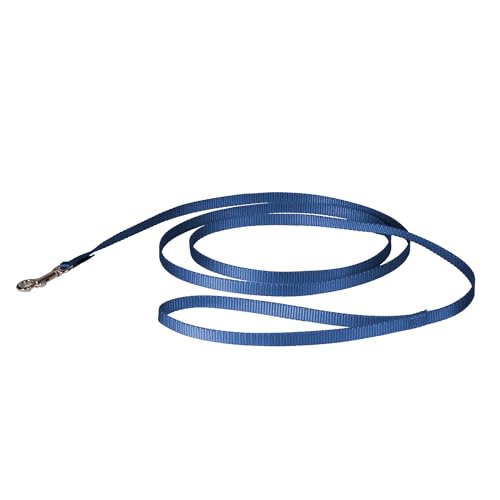
A plain six-foot flat lead, which is all these drills need and the exact opposite of a retractable. The bolt snap goes on and off easily, and PetSafe notes its nylon leashes pair with training aids like the Easy Walk harness. PetSafe has been a US manufacturer of pet behaviour, containment and lifestyle products since 1991.
What we love
- A fixed six feet, so slack is something you manage rather than something the leash pays out for pulling
- Easy on, easy off bolt snap hook
- Sold in several lengths and widths, so you can match the lead to the puppy
- PetSafe says it pairs with its own training aids, including the Easy Walk harness
Keep in mind
- A plain flat lead with no padded handle, so it can bite into your hand if a bigger puppy lunges
- 3/8 inch webbing is sized for small and medium dogs, not a large-breed adolescent
Frequently asked questions
Why does my puppy pull on the leash?
Because pulling works. The AKC puts the motive plainly in its guide to leash issues: your dog wants to walk, and that is why they are pulling you in the first place. Every step you take while the line is tight pays the pull. It is not a rank problem either. The AVSAB's dominance position statement says most undesirable behaviours in our pets are not related to priority access to resources, but are due to accidental rewarding of the undesirable behaviour, and to alternate appropriate behaviours not having been trained instead.
Do no-pull harnesses actually stop pulling?
They manage it; they do not teach anything. A front clip changes where the leash pressure lands and turns a lunge sideways instead of forward, which is why trainers hand them to owners who are being dragged. There is also evidence that the back-clip alternative can make pulling worse: Shih and colleagues, in Frontiers in Veterinary Science in 2021, measured 52 shelter dogs and found maximal leash tension, mean tension and time spent pulling were all greater in a back-connection harness than in a collar when the dogs were being attracted with food. The behaviour still has to be trained.
How long does it take to stop a puppy pulling on the leash?
Nobody can give you a date, and we will not invent one. Expect weeks of consistent practice rather than days, and expect a dip in the middle. Asher and colleagues, in a 2020 study of 69 guide dog candidates reported by Newcastle University, found the odds of a dog repeatedly ignoring its caregiver's sit cue were higher at eight months, during puberty, than at five months — and that the same drop did not show up with a stranger. The lead author advised against punishing dogs through that phase, because it is likely to make problem behaviour worse.
Should I put a head collar on a puppy that pulls?
Only with slow conditioning, and we would not reach for one first on a young puppy. The UC Davis veterinary medical teaching hospital's head halter handout recommends introducing a halter through desensitisation and counter-conditioning, fitting it over several sessions with treats while watching the dog's comfort, and warns against yanking the collar or suspending the dog by it. The Calgary Humane Society adds two cautions worth knowing: it says retractable leashes can seriously injure a dog wearing a head collar, and that dogs with flat faces or breathing difficulties may not suit one.
Is a quick leash correction ever acceptable?
Not on this site, and not according to the relevant veterinary body. The AVSAB's 2021 humane dog training position statement says evidence supports the use of reward-based methods for all canine training, that there is no evidence aversive training is necessary, and that aversive methods relying on force, pain or emotional or physical discomfort should not be used. It then names the techniques to avoid, and physical correction techniques — leash jerking and physical force — are on the list, alongside choke chains, prong collars and electronic shock collars.
About the author
James Martin
I'm an animal lover through and through. I grew up with dogs, my family always had at least one pet, and today I share my home with a rescue who is the love of my life. I started Healthy Puppy Review to help owners cut through the marketing noise and make confident, well-researched choices about their dog's health and happiness.