Could This Probiotic Help Your Dog's Digestive Health?
A daily probiotic may help support your dog's digestion, stool quality, and gut balance — especially during diet changes, antibiotics, or stress. Here's what actually matters when you choose one, plus the five we recommend.

Contains affiliate links · our policy

In this guide
If your dog has been dealing with soft stool, gas, or a stomach that gets thrown off easily, you've probably wondered whether a probiotic could help. The short, honest answer is: it might. A good canine probiotic can be a genuinely useful tool for supporting digestion — but it isn't a magic fix, and it's no substitute for a vet when something is actually wrong.
What Probiotics and Prebiotics Actually Do
Probiotics are live, beneficial bacteria — strains like Enterococcus faecium, Lactobacillus, Bifidobacterium, and spore-forming Bacillus subtilis. The idea is simple: your dog's gut is home to a huge community of microbes, and when that community gets thrown out of balance, digestion suffers. Topping it up with friendly bacteria may help nudge things back toward normal.
Prebiotics are the other half of the story. They aren't bacteria at all — they're specialized fibers like inulin and FOS (fructo-oligosaccharides) that act as food for the good bacteria already in the gut. A well-formulated supplement pairs the two, because live bacteria do their best work when there's something there to feed them.
It's worth being realistic about the evidence. Some uses are reasonably well-studied — E. faecium SF68, for example, has been shown to help shorten bouts of diarrhea in dogs and to support immune response. Other claims are thinner. Probiotics may help; they are not a cure-all, and a supplement can't fix a problem that has a different underlying cause.
Signs Your Dog Might Benefit
Probiotics tend to help most when the gut is temporarily disrupted. Situations worth considering one include:
- Switching foods. A sudden diet change is one of the most common triggers for loose stool.
- During or after antibiotics. Antibiotics wipe out good bacteria along with the bad, and a probiotic can help repopulate the gut.
- Stress and travel. Boarding, a move, a new pet, or a long car trip can all upset a sensitive stomach.
- Mild, occasional digestive upset. Intermittent soft stool or gas in an otherwise healthy, bright, active dog.
A daily probiotic is one piece of a healthy-gut routine. Diet matters too — many owners pair gut support with an omega-3 fish oil supplement for skin and coat, or a daily multivitamin to cover nutritional gaps.
When it's a vet visit, not a supplement
Some symptoms mean it's time to call your veterinarian instead of reaching for a probiotic: persistent vomiting or diarrhea, blood in the stool, black or tarry stool, refusing food, a painful belly, or a dog that seems weak or lethargic. These can signal serious problems that need real treatment. Probiotics are for support — they are never a substitute for veterinary care, and you should check with your vet before giving anything new to a puppy or a sick dog.
What to Look For: Strains, CFU Count, and Prebiotics
Not all probiotics are built the same. A few things separate a good one from a label gimmick:
- Strains. Look for named, dog-appropriate strains rather than a vague "probiotic blend." Enterococcus faecium SF68 has the most research behind it for canine diarrhea; multi-strain Lactobacillus and Bifidobacterium blends aim at broader, ongoing gut balance; and spore-forming strains like Bacillus subtilis are valued for being hardy.
- CFU count. CFU (colony-forming units) tells you how many live bacteria are in each dose. Most canine products land in the range of roughly 1 to 10 billion CFU per day, though effective single-strain products work at lower counts. A bigger number isn't automatically better.
- Prebiotics. A formula that includes prebiotic fiber gives the bacteria something to feed on once they arrive.
- Viability. Live bacteria die off over time, with heat, and on the shelf. The CFU on the label is only meaningful if it's guaranteed through the expiration date. Some products are shelf-stable; others (and many capsules) hold up better with refrigeration. Always check the date before you buy.
How We Picked
We focused on probiotics that are widely available, well reviewed, and made specifically for dogs — then weighed the strains used, the CFU counts, whether prebiotics were included, and how palatable each one is in the real world (a supplement only works if your dog will actually take it). We confirmed every product link below is live and points to an available listing.
Our top choice, Purina FortiFlora, earns the spot for the simple reason that it's the number-one veterinarian-recommended dog probiotic and uses one of the best-studied strains around. But each pick below suits a different dog and budget — a picky eater, a sensitive stomach, or an owner who just wants a sensible daily option. Whichever you choose, start with a quick word to your vet, especially if your dog is very young, very old, or unwell.
Our top picks

The number one veterinarian-recommended dog probiotic, and for good reason. This single-strain powder delivers Enterococcus faecium SF68 — one of the most-studied strains for canine diarrhea — in single-serving sachets you sprinkle over food.
What we love
- #1 vet-recommended brand with research behind its strain
- Tasty powder mixes easily into food
- Convenient single-dose sachets, no measuring
Keep in mind
- Single strain only, not a multi-strain blend
- Pricier per dose than chews

If your dog turns up its nose at powder, these soft chews go down like a treat. They pair the Bacillus subtilis DE111 strain with prebiotic fiber to support digestion and stool quality.
What we love
- Treat-like chew most dogs accept readily
- Includes prebiotics to feed the probiotics
- Shelf-stable spore-forming strain
Keep in mind
- Chews add a few calories per dose
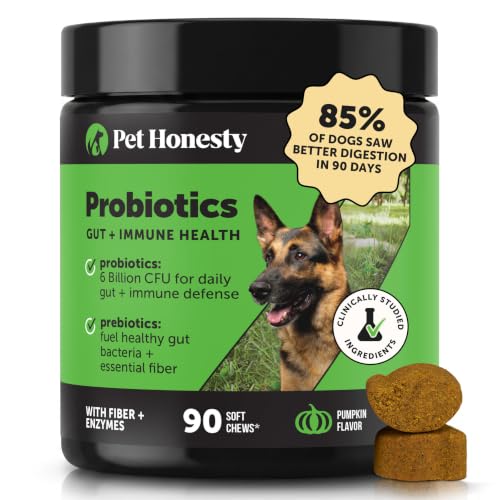
A higher-count, multi-strain chew aimed at dogs that need more digestive support. The 6 billion CFU blend is rounded out with prebiotics and pumpkin to help settle sensitive stomachs.
What we love
- Higher 6 billion CFU multi-strain blend
- Added pumpkin and prebiotic fiber
- Good fit for dogs with ongoing GI sensitivity
Keep in mind
- Higher CFU isn't automatically better for every dog
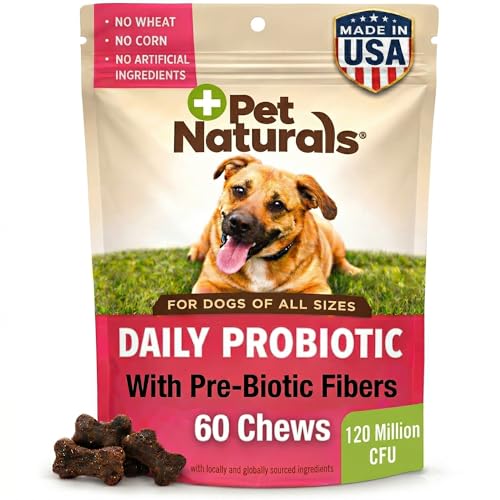
An affordable everyday option for owners who want a simple maintenance probiotic without a premium price. The bite-sized chews make daily dosing easy and budget-friendly.
What we love
- Lowest price per dose of our picks
- Small, easy-to-give chews
- Sensible choice for routine daily support
Keep in mind
- Lower potency than the dedicated GI formulas

A combined pre- and probiotic chew with a flavor profile fussy dogs tend to accept. Bundling prebiotic fiber with the live cultures helps the good bacteria do their job.
What we love
- Palatable for picky dogs
- Combines prebiotics and probiotics in one chew
- Reasonable mid-range price
Keep in mind
- Strain and CFU details are less detailed on the label
Frequently asked questions
Do I need to ask my vet before giving my dog a probiotic?
For a healthy adult dog, a quality canine probiotic is generally considered low-risk. But it's always smart to check with your veterinarian first — especially for puppies, senior dogs, or any dog with an existing health condition or on medication. A probiotic should support a healthy routine, not replace veterinary care.
What benefits can a probiotic actually offer my dog?
The best-supported uses are helping firm up loose stool and shortening bouts of mild diarrhea, supporting digestion during diet changes or antibiotics, and helping the gut microbiome stay balanced during stress or travel. Some strains may also support immune balance. Probiotics may help — they are not a cure for an underlying illness.
How many CFUs should a dog probiotic have?
CFU (colony-forming units) is a count of live bacteria per dose. Most canine products land somewhere in the range of roughly 1 to 10 billion CFU per day, though effective single-strain products like FortiFlora work at lower counts. More isn't automatically better — the strain and proven viability through the expiration date matter more than a big number on the label.
Will a probiotic stop my dog from licking or chewing their paws?
There's no solid evidence that probiotics stop paw licking. That behavior is usually driven by allergies, skin infection, anxiety, or pain, and it deserves a proper diagnosis. Treat a probiotic as digestive support, not a fix for itchy paws.
How long until I see results?
For acute digestive upset, some dogs respond within a few days. For ongoing gut support, give it a couple of weeks of consistent daily use. If your dog isn't improving — or is getting worse — stop guessing and call your vet.
About the author
James Martin
I'm an animal lover through and through. I grew up with dogs, my family always had at least one pet, and today I share my home with a rescue who is the love of my life. I started Healthy Puppy Review to help owners cut through the marketing noise and make confident, well-researched choices about their dog's health and happiness.