Can't believe how well this vitamin works for dogs
A daily multivitamin can help fill real nutritional gaps for some dogs — but a pup on a complete commercial diet usually doesn't need one. Here's how to choose by life stage, plus the five dog multivitamins we recommend right now.

Contains affiliate links · our policy

In this guide
Walk down the supplement aisle and the message is clear: your dog "needs" a daily multivitamin to thrive. The reality is more nuanced. A good multivitamin can genuinely help certain dogs fill real nutritional gaps, but for the majority of pups eating a complete, balanced food, it's an extra that does little — and the wrong one, or too much of one, can actually do harm. Here's how to tell the difference, and the five dog multivitamins we'd reach for when one is actually warranted.
What a Dog Multivitamin Actually Does
A canine multivitamin is a blended supplement that delivers a range of vitamins (like A, the B-complex, C, D, and E) and minerals (like zinc, iron, and selenium) in a single chew or tablet. Many also bolt on extras such as glucosamine for joints, omega fatty acids for skin and coat, or probiotics for digestion.
The key word is supplement. A multivitamin is designed to top up nutrients a dog might be missing — not to be their primary source of nutrition. It can't make a poor diet into a good one, and it won't cure disease. At best, the right product for the right dog may support overall wellness by closing a genuine gap.
Who Actually Benefits — and Who Doesn't
This is where most marketing overpromises. If your dog eats a complete and balanced commercial food that carries an AAFCO statement for their life stage, that food is already formulated to meet their full vitamin and mineral requirements. The National Research Council notes that healthy dogs on these diets generally don't need supplements — and piling extras on top can do more harm than good.
A multivitamin is more likely to help if your dog falls into one of these groups:
- Home-cooked or raw diets. Unless carefully balanced by a veterinary nutritionist, DIY diets often miss key nutrients, and this is where a multivitamin earns its keep.
- Picky eaters or dogs recovering from illness who aren't reliably finishing a balanced meal.
- Some senior dogs whose appetite or absorption has changed with age.
- Dogs with a vet-diagnosed deficiency or a condition that affects how they take up nutrients.
For everyone else, the money is usually better spent on quality food. If you're already addressing specific needs — say, an omega-3 fish oil for coat and inflammation or a daily probiotic for digestion — layering a broad multivitamin on top risks doubling up on the same ingredients.
The Safety Rule: More Is Not Better
It's tempting to think a few extra vitamins can't hurt. They can. Fat-soluble vitamins — A, D, E, and K — are stored in the liver and body fat rather than flushed out in urine, so excess accumulates over time. Too much vitamin D can drive blood calcium dangerously high and damage the kidneys; too much vitamin A can harm bones and organs. Giving a multivitamin on top of an already-fortified food is one of the easiest ways to tip a dog into this kind of toxicity.
Talk to your vet before adding any supplement
Always run a new supplement past your veterinarian first — especially if your dog takes medication, has a kidney, liver, or other health condition, or is a large-breed puppy. Some vitamins and minerals interact with medications or are inappropriate for certain conditions. And never give your dog a human multivitamin: ingredients like iron, vitamin D, and the sweetener xylitol can be toxic to dogs. If your dog ever eats your supplements, call your vet or a pet poison line right away.
How to Choose by Life Stage
If you and your vet decide a multivitamin makes sense, match it to your dog's stage of life:
- Puppies. Growing dogs have distinct needs, but most quality puppy foods already meet them. Be especially cautious with calcium: too much can disrupt the calcium-to-phosphorus balance and harm skeletal development in large-breed puppies. Only supplement a puppy with veterinary guidance.
- Adults. A simple daily formula is enough for most adult dogs who need anything at all. Adding joint, skin, or gut support can be convenient, but only if you're not already covering those areas elsewhere.
- Seniors. Older dogs may benefit from formulas with added antioxidants, and many seniors also have age-related issues — like stiff joints — that deserve their own attention. If joints are the real concern, see our guide on how to make your dog's joints feel better rather than relying on a general multivitamin to do that job.
How We Picked
We started by ruling out the hype: no product here is presented as a cure or a replacement for good food. We looked for dog-specific formulas from established brands, sensible ingredient lists matched to a clear life stage, palatable formats that dogs will actually eat, and fair value. We also confirmed every product link below is live and points to an available listing. Our top choice, the Zesty Paws 8-in-1, stood out as a flexible all-rounder for an adult dog with a genuine gap — but each pick below suits a specific kind of dog. As always, the right answer for your dog starts with a conversation with your veterinarian.
Our top picks

A broad daily soft chew that bundles vitamins and minerals with extras like glucosamine, probiotics, and omega fatty acids, aiming to cover several wellness areas in one tasty chew. A reasonable all-rounder for adult dogs whose diet has a genuine gap.
What we love
- Combines vitamins with joint, gut, and skin support
- Soft chew format most dogs eat willingly
- Made for adult dogs of most sizes
Keep in mind
- All-in-one extras may overlap with supplements you already give
- Not a substitute for a balanced diet

A chewable formulated for growing dogs, with vitamins and minerals geared toward puppy development. Use only if your vet agrees a supplement is needed, since most quality puppy foods already meet growth requirements.
What we love
- Tailored to a puppy's developmental stage
- Easy-to-give chewable tablet
- Budget-friendly
Keep in mind
- Most puppies on complete food don't need it
- Extra calcium can harm large-breed pups — ask your vet

A senior-focused chew that pairs core vitamins and minerals with antioxidants aimed at supporting aging dogs. A sensible pick for older pups whose appetite or diet has changed, with your vet's sign-off.
What we love
- Antioxidant blend geared to senior dogs
- Made by a well-known supplement brand
- Often the best value of the group
Keep in mind
- Won't replace dedicated joint or kidney care
- Senior dogs often have conditions that need vet oversight first
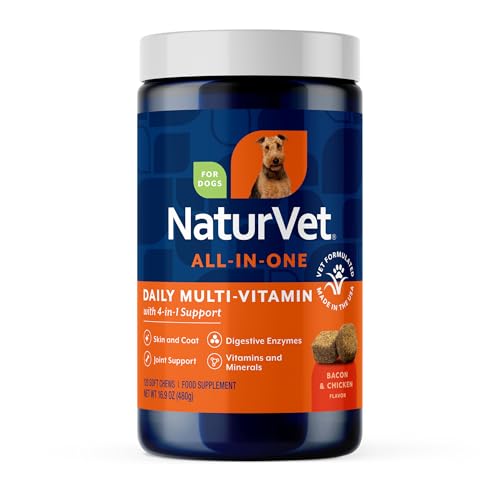
A do-everything supplement that layers multivitamin support with joint, skin-and-coat, and digestive ingredients. Handy if you want one product instead of several, but watch for overlap with anything else you give.
What we love
- Covers multiple wellness areas in one product
- Can simplify a multi-supplement routine
- Widely available
Keep in mind
- Easy to over-supplement if combined with other products
- Jack-of-all-trades formula isn't tailored to one need
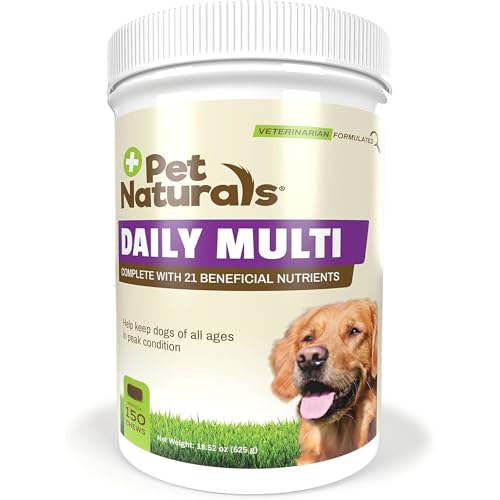
A straightforward daily multivitamin chew that sticks to vitamins and minerals without piling on extras — a clean, affordable choice when you simply want to fill a basic dietary gap.
What we love
- Simple, focused multivitamin formula
- Low cost per chew
- Palatable for most dogs
Keep in mind
- No joint or gut extras if you want them
- Still unnecessary for dogs on a complete diet
Frequently asked questions
Does my dog actually need a multivitamin?
Probably not, if they eat a complete and balanced commercial food. Diets that carry an AAFCO statement for your dog's life stage are already formulated to meet their vitamin and mineral needs, and the National Research Council notes that healthy dogs on these diets generally don't require supplements. Multivitamins make the most sense for dogs on homemade or unbalanced diets, picky eaters, some seniors, or dogs with a vet-identified deficiency. Always ask your veterinarian first.
Can you give a dog too many vitamins?
Yes — and it can be dangerous. Fat-soluble vitamins (A, D, E, and K) are stored in the liver and fat rather than flushed out in urine, so excess builds up over time. Too much vitamin D can cause high blood calcium and kidney damage, and too much vitamin A can damage bones and organs. Never double up if your dog's food is already fortified, and never exceed the label dose.
Can I just give my dog my own multivitamin?
No. Human multivitamins can contain iron, vitamin D, or the sweetener xylitol at levels that are toxic to dogs. Xylitol can trigger a dangerous blood-sugar crash, and iron from prenatal or adult vitamins can cause poisoning. Use a product formulated specifically for dogs, and call your vet or a pet poison line if your dog eats your supplements.
Are multivitamins safe to give alongside my dog's medications?
Check with your veterinarian first. Some vitamins and minerals can interfere with medications or be inappropriate for dogs with kidney, liver, or other health conditions. Bring the supplement label to your vet so they can confirm it won't overlap with anything your dog is already getting.
How long before I see results from a dog multivitamin?
Supplements support health over weeks to months rather than overnight, and the effects are subtle — a multivitamin is not a cure for any specific problem. If your dog has visible symptoms like a dull coat, low energy, or stiffness, see your vet to find the cause rather than assuming a multivitamin will fix it.
About the author
James Martin
I'm an animal lover through and through. I grew up with dogs, my family always had at least one pet, and today I share my home with a rescue who is the love of my life. I started Healthy Puppy Review to help owners cut through the marketing noise and make confident, well-researched choices about their dog's health and happiness.