Puppy Teething vs. Biting: How to Tell Which One You're Dealing With
Teething chewing is about the object and the gums. Play biting is about you. The two look identical from the couch and need opposite responses, so here are the five tells that separate them, a two-question test you can run in five minutes, and the third category most lists miss.

Contains affiliate links · our policy
In this guide
- Puppy teething or biting? The five tells
- The five-minute test you can run tonight
- Why teething and biting overlap between 3 and 6 months
- What to do if it is teething
- What to do if it is play biting
- The third option most lists miss: the overtired bite
- When it is neither: what genuine warning signs look like
- Putting it together
- Our Top Picks
- FAQ
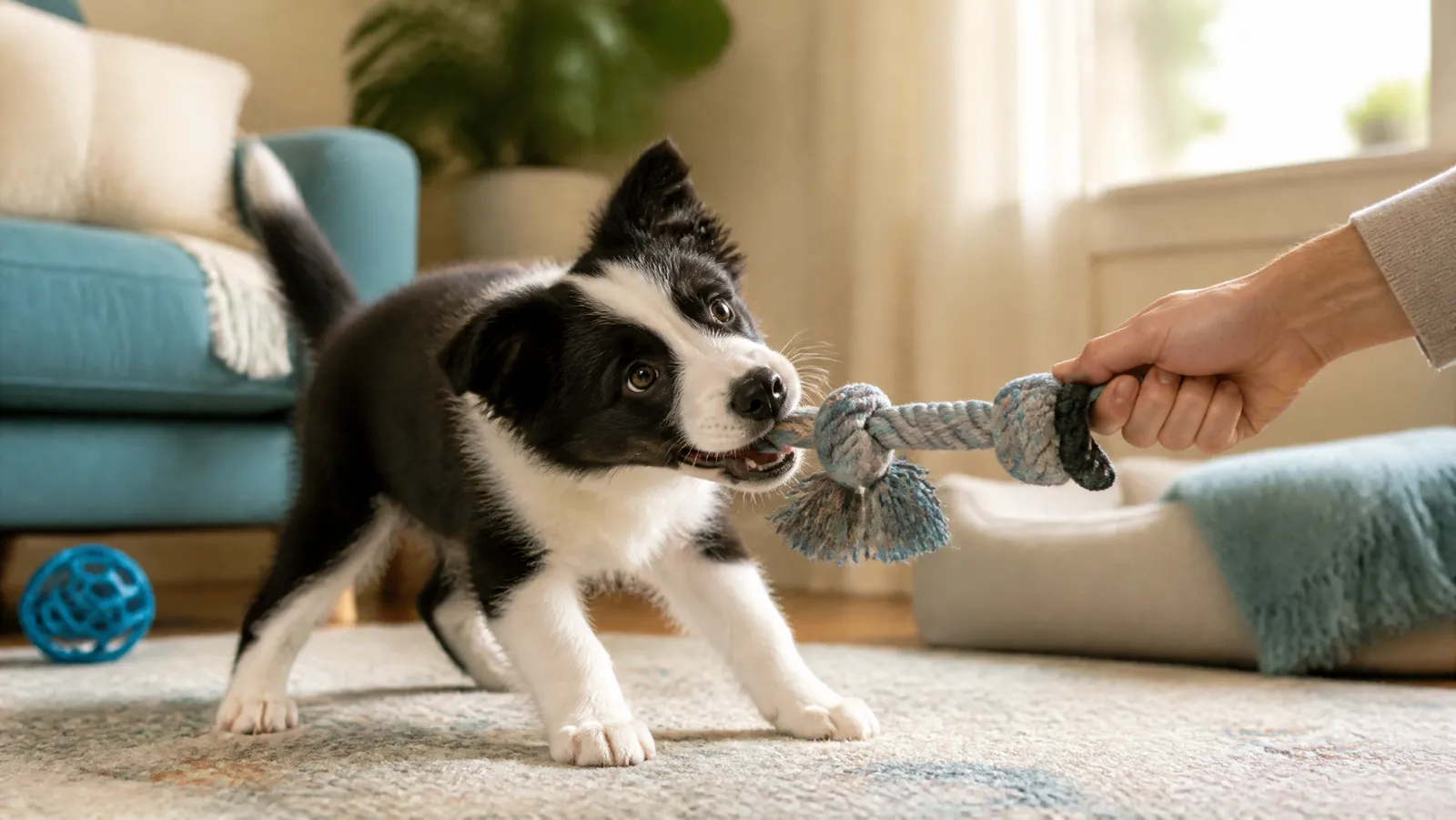
Here is the short answer: teething chewing is about the object and the gums; play biting is about you. A teething puppy gnaws whatever has give — a chair leg, a chew toy, a shoe — slowly and repetitively. A play-biting puppy goes for hands, sleeves and ankles, and gets wilder the longer it runs.
We may earn a commission from links on this page, at no extra cost to you.
From the couch at 6am they look identical, and they need opposite responses. Chewing needs a better object. Play biting needs a different game — to a wound-up puppy, a better object is just something to drop on the way back to your hand. Get this wrong and you spend three weeks buying toys for a problem that was never about toys.
This piece is only the diagnostic. If you want the full arc, we have teething and biting explained end to end. Here we answer one question: which one is this?
Puppy teething or biting? The five tells
Run through these in order. The first three you can judge from where you are sitting; the last two take a couple of minutes.
1. The target: your furniture or your hands
Teething puppies chew things. Play-biting puppies chew you.
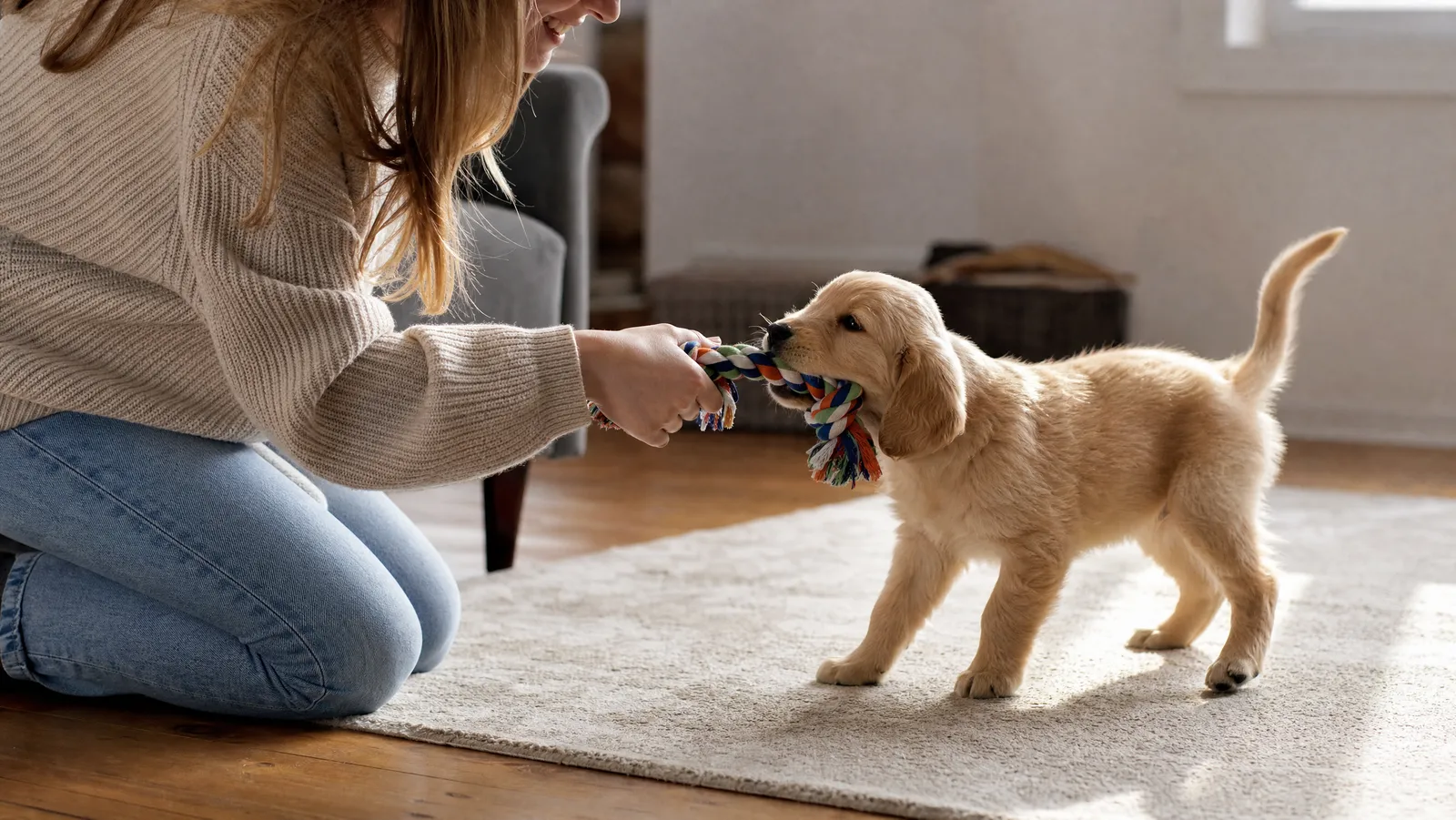
A teething puppy works a table leg, a rug edge or a toy, and carries on after you leave the room. A play-biting puppy's targets move: hands, cuffs, trouser hems, ankles, hair. Movement is the appeal, which is why it follows you from room to room and dies the moment you stop being interesting. If it follows you, it is not the gums — we go deeper into why in why does my puppy bite me.
2. The trigger: idleness versus arousal
Teething gnawing starts from nothing in particular. The puppy is loose in the kitchen, there is a chair leg, the mouth hurts, and twenty minutes disappear.
Play biting has a starter pistol: a game, the doorbell, children running, you coming home, a high-pitched voice. If you can name the thing that set it off, you are looking at arousal rather than discomfort.
3. The body: absorbed versus bouncy
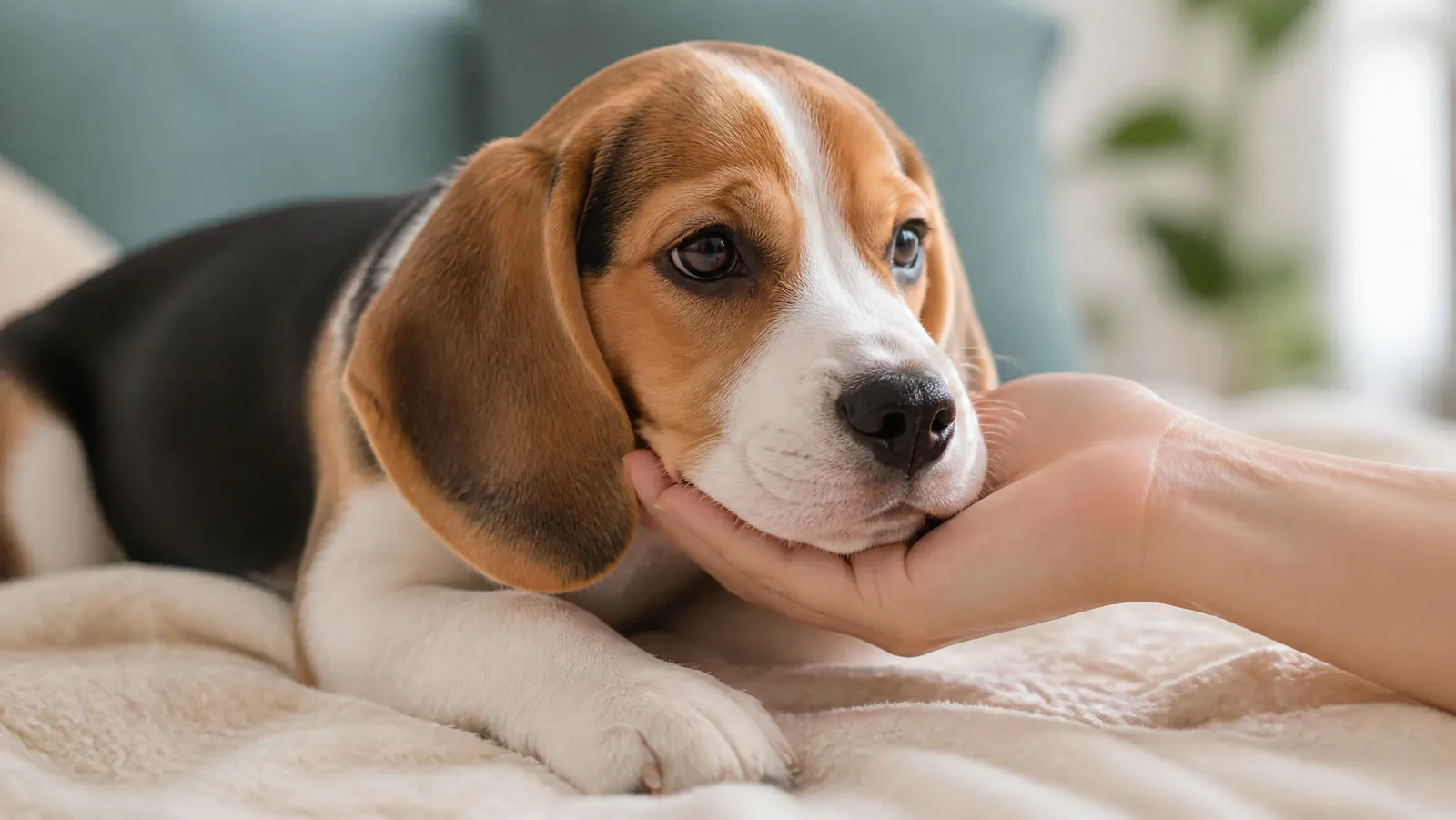
The ASPCA describes playful mouthing as happening with a relaxed body and face — the muzzle may look wrinkled, but there is little tension in the facial muscles. Teething chewing is different again: head down, eyes half closed, settled in one spot, the same grinding motion for minutes on end. Almost boring to watch.
Play biting is springy. Bouncing, spinning, play bows, a lot of noise, zoomie-adjacent.
4. The frozen-chew test
The most useful tell, and it takes two minutes. Offer something cold and legal to chew.
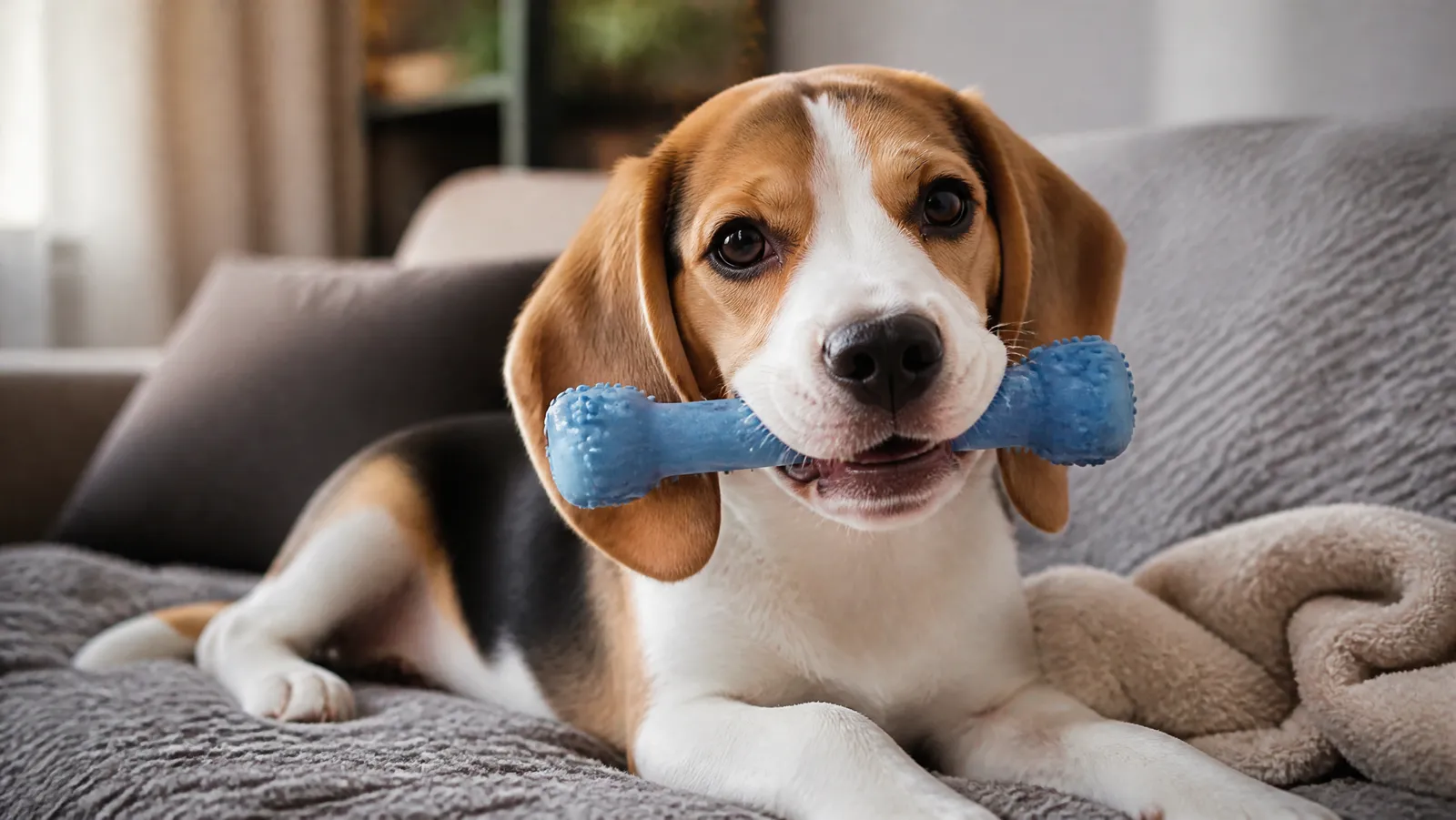
A teething puppy usually settles with it. A play-biting puppy typically takes it, drops it within seconds and comes straight back for your hand — the chew was never the point. The cold is what makes this diagnostic rather than a distraction: it gives a sore mouth something it actually wants.
5. The arousal curve: steady versus ramping
Teething chewing is flat. The puppy chews at roughly one intensity for as long as the toy holds up, then stops and sleeps.
Play biting ramps — faster, harder and less accurate the longer it runs, which is backwards from what most owners expect. They keep playing in the hope the puppy will tire out, and it gets worse. Escalation points to play rather than a sore mouth — though an overtired puppy escalates too, which is the third category below.
The five-minute test you can run tonight
Two questions, in this order.
Does a cold chew end it? Hand over a chilled, puppy-appropriate chew and sit back without engaging. Give it a full two minutes.
Does the behaviour stop when you do? Stand up and leave — over a baby gate, or out of the room. The San Francisco SPCA suggests praising your puppy the moment she is calm, and stepping away for about 20 seconds if the hard mouthing carries on.
What the outcomes mean:
- Settles with the chew, and keeps chewing after you leave — teething. Manage the mouth.
- Ignores the chew, follows you, bites at your legs as you go — play biting. Manage the game.
- Stops the instant you leave, then falls asleep within minutes — overtired. Manage the nap schedule.
- Neither, and the body looks stiff rather than bouncy — stop testing and read the last section.
Why teething and biting overlap between 3 and 6 months
The honest answer at four months is often both, in the same ten minutes, and the two timelines explain why.
On teeth, the AKC says a puppy's roughly 28 baby teeth are all in by weeks 5 to 6. From about weeks 12 to 16 they shed — you find crumb- to rice-sized pieces around the house — while the adult teeth push through, a process the AKC calls painful. By around six months the baby teeth should be gone and the adult set of about 42 teeth in place, and the AKC advises reporting any retained baby teeth to a veterinarian.
On behaviour, the ASPCA defines bite inhibition as a dog's ability to control the force of his mouthing, and says puppies mostly learn it in play with other puppies: bite too hard, the playmate yelps, play pauses. The San Francisco SPCA puts the finish line at roughly 4.5 to 5 months, when the adult teeth are in.
The sore-mouth window and the bite-inhibition window overlap. So the useful version of the question is which one is loudest right now, not which one is it.
We cover the rest of the teething picture — the drool, the lost teeth, the puppy who goes quiet — in puppy teething symptoms. A teething puppy that goes off its food is a reason to call your vet rather than wait it out.
What to do if it is teething
The goal is a mouth with somewhere legal to go all day.
Run a rotation, not a single toy. Three or four chews in circulation keeps novelty up; our shortlist is in must-have toys for a new puppy.
Use cold, carefully. Writing for dvm360, veterinary technician Patricia March advises against giving puppies ice cubes, because puppy teeth are fragile and more likely to break. Her alternatives: wet a towel, twist it into a rope and freeze it, or offer cold carrots — no more than one whole carrot a day, because of the fiber. She also notes that puppy-specific toys can be frozen for relief, and that no toy or implement should be offered without supervision.
The Nylabone Puppy Chew Teething Ring Bone is about $4 as of October 2026 and is freezer-friendly, with ridges and nubs meant to work sore gums while helping clean the teeth. Read the limits first: Nylabone sizes it for x-small dogs up to 15 pounds, and states it is not intended for powerful puppies or for puppies that already have adult teeth. A short-window chew by design.
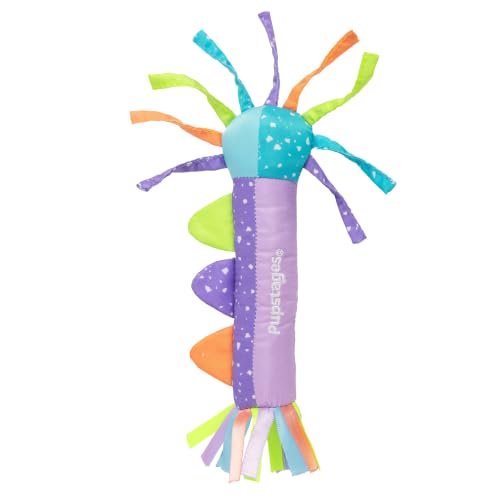
The Pupstages Cool Teething Stick is about $5 as of October 2026 and is made to be soaked and frozen — a soft stuffed shell with fringe, marketed for moderate chewers, small dogs and teething puppies. The maker is blunt that no toy is indestructible: do not leave it with an unsupervised pet, and discard it once it is damaged. We would treat it as a supervised ten-minute tool, not a babysitter.
Keep the vet in the loop. The AKC advises offering safe chew toys through the 12-to-16-week stage and having your veterinarian check the mouth as the teeth change. On pain relief the dvm360 article is firm: never give over-the-counter pain medication without the express permission of your veterinarian, and even holistic remedies such as clove oil are not recommended for puppies.
What to do if it is play biting
Nothing here involves a purchase, because the problem is not a shortage of objects.
End the game instead of escalating. The San Francisco SPCA suggests a loud ouch and turning your back, then turning back to praise her once she is calm — and if the hard mouthing continues, stepping away for about 20 seconds. It recommends lowering your tolerance gradually, week by week, and says puppies over about five months should get an ouch for all mouthing. The ASPCA adds an exception: do not yelp at a puppy who is growling in a tantrum, because it may intensify the behaviour.
Stop playing hand games. The ASPCA specifically advises against wiggling fingers or toes at a puppy, and recommends noncontact play such as fetch with mouthing redirected to toys or chew bones. Every hand game teaches the rule you are trying to unteach.
Do not punish the mouth. The San Francisco SPCA says holding a puppy's muzzle shut, slapping her nose or shouting in her face are methods that studies show increase the likelihood a dog develops aggression. The ASPCA likewise warns that slapping, hitting or scruffing can make biting worse or cause fear and aggression.
Feed the brain and the body. The San Francisco SPCA suggests plenty of chew toys and exercise to reduce the intensity of play biting and jumping. A puppy with nothing to do invents something, and your hands are the nearest toy.
And the part most new owners are quietly worried about: the San Francisco SPCA describes play biting as normal and healthy behaviour, and says it is not in any way an indication your puppy will grow up to be aggressive. For the step-by-step version, see how to stop puppy biting.
The third option most lists miss: the overtired bite
There is a nightly window — many owners call it the witching hour — where a puppy who was fine an hour ago turns frantic. The biting is fast, indiscriminate and oddly hard to interrupt, often with zoomies attached. Offer a chew and it gets flung. End the game and the puppy escalates instead of settling.
This is the sleep bucket, not the teeth bucket. The AKC says puppies usually sleep 18 to 20 hours a day, that a puppy may nap every hour or so for anywhere from 30 minutes to two hours, and that naps typically follow play or a walk. It also notes that too much stimulation and exhaustion can lead to unfortunate behaviour, and recommends guiding a tired puppy to its crate to wind down.
The fix is a nap, not a correction. A quiet, boring, consistent place to crash is the whole intervention, which is one more reason we are keen on crate training your puppy. If the meltdown lands at the same time every evening, start the nap 30 minutes earlier tomorrow.
When it is neither: what genuine warning signs look like
This article cannot diagnose aggression, and neither can any other article. What we can do is describe the picture that means stop testing and get a professional involved.
The ASPCA contrasts playful mouthing with a different set of signals: a stiff or frozen body, lips pulled back to expose the teeth, growling, and bites much more painful than normal play mouthing. In its food-guarding guidance it lists standing stiffly over the bowl, tensing or freezing, growling, staring, snapping, snarling and biting or chasing people away as signs of possible aggression, and advises stopping and contacting a professional.
In plain terms: a body that goes still rather than bouncy, a hard stare with a low growl, freezing or guarding over food, a bone or a stolen sock, and bites that break skin outside play.
Two steps if that is what you are seeing. First, ask your veterinarian to rule out pain — a mouth or a body that hurts can change behaviour, and the AKC already recommends a mouth check while the teeth are changing. We are not saying your puppy is in pain; we are saying it is cheap to check first. Second, get qualified eyes on the behaviour: the ASPCA advises consulting a Certified Applied Animal Behaviorist (CAAB or ACAAB) or a board-certified veterinary behaviorist (Dip ACVB) for suspected fearful or aggressive biting, and notes that a Certified Professional Dog Trainer can help with mouthing as long as you confirm they have experience with fear and aggression.
Putting it together
Three questions get you most of the way: What is the puppy biting? What set it off? Is it getting better or worse the longer it runs?
Objects, boredom and steady means teeth. You, excitement and escalating means play. Frantic and immune to both fixes means sleep. A body that stiffens rather than bounces means a professional rather than another test.
Once you know which one you have, the response is straightforward — and if you want all of it in one place, that is what we built our puppy teething and biting survival guide for.
Our top picks

A cheap, soft, freezer-friendly ring built for the narrow window this article is about: a gentle-chewing puppy with baby teeth. Nylabone puts ridges and nubs on it to work the gums while helping clean the teeth, and the material is soft enough that it ages out once the adult teeth are in.
What we love
- Can be chilled in the freezer for extra teething relief
- Ridges and nubs intended to soothe sore gums while helping clean teeth
- Chicken flavor is infused throughout, not sprayed on the surface
- Made in New Jersey, USA
Keep in mind
- Nylabone states it is NOT intended for powerful puppies or puppies that already have adult teeth, so it is a short-window chew
- Sized for x-small dogs up to 15 pounds only
You soak this one and freeze it, which makes it a cheap way to run the cold-chew test without handing a puppy an ice cube. The soft stuffed shell and fringe give it several textures, and it throws, so the same toy covers a fetch game when the real problem turns out to be boredom.
What we love
- Soak and freeze design delivers a cool, soothing chew
- Soft multi-textured shell with fringe
- Doubles as a toss-and-fetch toy, which helps when the biting is arousal rather than gums
- Marketed for moderate chewers, small dogs and teething puppies
Keep in mind
- The maker warns that no toy is indestructible: do not leave it with unsupervised pets and discard it if it is damaged
- A soft stuffed shell is the wrong choice for a determined shredder
Frequently asked questions
Do puppies bite more when they are teething?
Many owners find the mouthiness peaks in the same stretch as teething, and the timelines explain why. The AKC says baby teeth shed and adult teeth emerge from roughly weeks 12 to 16, a process it calls painful. The San Francisco SPCA says puppies learn to control their bite force by the time the adult teeth are in, around 4.5 to 5 months. So a sore mouth and an unfinished skill arrive together. It is usually both at once rather than one or the other.
How can I tell if my puppy is teething or biting?
Watch the target and the trend. Teething chewing is slow, repetitive and aimed at objects with give, and it continues after you leave the room. Play biting follows your hands, sleeves and ankles, starts from excitement rather than boredom, and gets worse the longer it runs. Offer a legal cold chew: a teething puppy settles with it, while a play-biting puppy drops it and comes back for your hand.
What is the difference between teething and aggression in puppies?
Body language rather than force. The ASPCA describes playful mouthing as happening with a relaxed body and face, and says a stiff or frozen body, lips pulled back to show teeth, or growling point to something other than play, with bites that are much more painful than normal play mouthing. No article can diagnose aggression, including this one. If that second picture is what you see, the ASPCA advises getting a qualified behavior professional involved.
Can I give my teething puppy ice cubes to chew?
A veterinary technician writing for dvm360 advises against it, because puppy teeth are fragile and more likely to break. The same article suggests wetting a towel, twisting it into a rope shape and freezing it instead, and notes that cold carrots may ease discomfort, with no more than one whole carrot a day because of the fiber. It also says no toy or implement should be offered without supervision.
My puppy only bites in the evening. Is that teething?
Often it is neither teething nor ordinary play. The AKC says puppies usually sleep 18 to 20 hours a day, may nap every hour or so for 30 minutes to two hours, and that regular naps help prevent overtired behavior, noting that too much stimulation and exhaustion can lead to unfortunate behavior. Frantic early-evening biting that is hard to interrupt often points to an overtired puppy, and a nap may do more than a correction.
About the author
James Martin
I'm an animal lover through and through. I grew up with dogs, my family always had at least one pet, and today I share my home with a rescue who is the love of my life. I started Healthy Puppy Review to help owners cut through the marketing noise and make confident, well-researched choices about their dog's health and happiness.