Large-Breed Puppy Feeding: Why Growing Slower Is Growing Better
Large-breed puppy feeding has one goal that surprises most new owners: slowing growth down. A large-breed growth formula, measured portions, and no calcium supplements may help protect developing joints — without changing your puppy's adult size. Here's the full plan, plus the two foods and the scale we'd buy.

Contains affiliate links · our policy

In this guide
Here's the whole strategy in one sentence: large-breed puppy feeding is about growing slower, not smaller. Feed a food carrying the AAFCO large-breed growth statement, portion it in measured meals to keep your puppy lean, skip calcium supplements entirely, and stay on the growth formula past the first birthday. Genetics largely decide how big your dog gets — according to VCA Animal Hospitals, a dog's adult size may be determined by genetics, while nutrition affects how long it takes to reach that size. A puppy that grows slower still gets there, just a bit later. What feeding controls is how safely the skeleton gets there.
This guide covers the large-breed specifics: what counts as "large," why the growth rate matters, the calcium trap, portions, and when to switch to adult food. For the day-to-day routine — meal times, portion math, and food transitions for puppies of every size — start with our puppy feeding schedule and portion guide.
What Counts as a Large-Breed Puppy?
The pet food industry has a precise answer, and it's printed on every bag. AAFCO — the organization whose model regulations define US pet food labeling — draws the line at an expected adult weight of 70 pounds or more. A food that's safe for big puppies carries a nutritional adequacy statement ending in the phrase "including growth of large size dogs (70 lb or more as an adult)."
That wording is doing real work. Under AAFCO's model regulations, as reported by Petfood Industry, a growth or all-life-stages food only earns the "including" phrase if its calcium tops out at 1.8% on a dry-matter basis; foods with more calcium must instead say "except for growth of large size dogs (70 lb or more as an adult)." One word — including versus except — is the difference between a food your Labrador puppy can eat and one they shouldn't.
So the buying rule is simple: flip the bag over, find the AAFCO statement in the fine print, and read the last clause. If your puppy's expected adult weight is 70 pounds or more — Labs, goldens, shepherds, and every giant breed — the statement must say including. Our guide to how to read a dog food label walks through where that statement hides and what the rest of it means.
For mixed breeds, the honest answer is that "expected adult weight" is a forecast, and it's worth making that forecast with a professional rather than a guess.
Not sure how big your puppy will get?
For mixed breeds and rescues, ask your veterinarian to estimate adult weight — they'll factor in breed mix, current growth curve, and paw and bone structure. If the estimate lands anywhere near 70 pounds, we'd feed as a large breed; the controlled-growth approach carries no downside for a dog that tops out at 60. And if you ever notice limping, bunny-hopping, reluctance to climb stairs, or pain after play in a growing puppy, book a vet visit promptly rather than adjusting food and waiting.
Why Growing Slower Is Growing Better
Large and giant breeds do an extraordinary amount of building in their first two years, and the speed of that building is exactly where things can go wrong. A review of developmental orthopedic disease in dvm360 identifies two major nutritional risk factors: rapid growth — usually driven by excess calories — and excess calcium intake. Together they predispose big puppies to a family of problems called developmental orthopedic disease (DOD), which per the same review includes hip dysplasia, osteochondrosis, panosteitis, and hypertrophic osteodystrophy.
The counterintuitive part is what slower growth doesn't change. VCA Animal Hospitals notes that a dog's adult size may be determined by genetics while nutrition affects how long it takes to get there — and that moderate energy and food restriction during growth in large-breed dogs can decrease hip dysplasia risk without interfering with their ultimate adult size. You are not stunting your Great Dane by feeding a controlled-growth diet. You're giving cartilage and bone time to mature before they carry a hundred pounds.
That's the entire logic behind large-breed puppy formulas. As the dvm360 review describes them, these diets have a reduced caloric density and reduced calcium and phosphorus compared with other growth diets — deliberate adjustments meant to slow the growth rate and lower DOD risk. A chubby, fast-growing puppy looks thriving; a lean one on a slower curve is actually the healthier project.
Two levers control that curve, and you manage both at the food bowl: how much calcium goes in, and how many calories. The next two sections take them in turn.
The Calcium Trap in Large-Breed Puppy Feeding
Calcium feels like the safest thing you could give a growing dog. For large-breed puppies, the opposite is true, and the reason is a quirk of puppy physiology: young puppies can't effectively regulate calcium absorption. Veterinary nutrition sources — including a large-breed puppy nutrition review in Today's Veterinary Nurse — note that until about six months of age, a puppy's small intestine passively absorbs roughly 70% of the calcium in the diet regardless of need; unlike adult dogs, young puppies can't dial absorption down when intake climbs. Feed excess calcium and the puppy retains more of it, and that surplus is one of the two nutritional drivers of skeletal disease described above.
This is why AAFCO bounds calcium so tightly for growth diets — a minimum of 1.2% and, for foods feeding large-size puppies, a maximum of 1.8% on a dry-matter basis, per Petfood Industry's summary of the AAFCO nutrient profiles. Both directions matter: too little calcium causes its own developmental problems, which is also why home-built "balanced" diets are risky for big puppies. A complete large-breed growth formula lands inside the window by design.
No calcium supplements. Full stop.
Never add calcium supplements — powders, tablets, or "bone-building" chews — on top of a complete large-breed puppy food. The food already sits inside AAFCO's calcium range for large-breed growth; supplementing pushes total intake past it, and veterinary sources identify excess calcium as a major nutritional risk factor for developmental orthopedic disease in exactly these puppies. Eggshell powder and multivitamins with added calcium count too. If someone insists your puppy needs extra calcium, that's a question for your veterinarian, not the supplement aisle.
The practical upshot is pleasantly boring: buy a complete large-breed puppy food, feed only that food plus sensible treats, and the calcium problem solves itself.
How Much to Feed a Large-Breed Puppy
Calories are the second lever, and the more commonly mishandled one. The dvm360 review notes that of the two risk factors, rapid growth from excess calories appears to be the most prevalent — plain overfeeding does more harm in this category than any ingredient choice.
Start with the feeding chart on your bag for your puppy's age and expected adult weight, and split the total into meals — our puppy feeding chart explains how to read those tables and adjust as your puppy grows. Then treat the chart as a starting point you correct against the actual dog. Two rules from the veterinary literature shape everything else:
- No free-choice feeding. VCA Animal Hospitals warns that leaving food down all day raises the risk of excess body fat and, in large-breed puppies, skeletal abnormalities — and recommends portion feeding instead. Measured meals — with an actual measuring cup or, better, a gram scale — are the only way to know what's going in.
- Feed to body condition, not to the chart. The 9-point body condition score (BCS) used by WSAVA and the Purina Institute is your steering wheel. Per the Purina Institute, the ideal is a 4 to 5 out of 9: ribs easily felt under light pressure, a visible waist from above, and an abdominal tuck from the side.
If there's one study to know here, it's Purina's 14-year lifetime study of 48 Labrador retrievers. Dogs fed 25% less than their paired littermates stayed leaner — and per the Purina Institute, the lean-fed dogs lived a median 1.8 years longer, and by the study's end 83% of control-fed dogs showed radiographic signs of hip osteoarthritis versus 50% of the lean-fed group. Same genetics, same food, different amounts. Portion control is joint care.
Here's the weekly routine we'd actually run:
- 1
Weigh weekly, same day and time
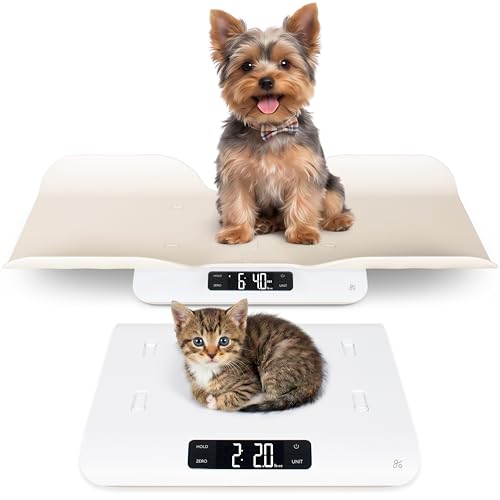
Weigh your puppy once a week — before breakfast is easiest to keep consistent — and log it. A pet scale with 0.1 lb precision (like our growth-tracking pick below) catches trends a bathroom-scale-and-subtract routine misses. Steady, gradual gains are the goal; a sudden jump in the curve is a portion cue.
- 2
Score body condition every two weeks
Hands on ribs, look down from above, look from the side. Aiming for that lean 4–5 out of 9: ribs easy to feel, waist visible, belly tucked. Ask your vet to score alongside you at each puppy visit until your hands are calibrated.
- 3
Adjust portions in small steps
Trending plump? Many vets suggest trimming the daily total in small steps — on the order of 5–10% — and re-checking in two weeks. Ribs and hips looking bony? Nudge portions up by the same amount. Count training treats in the daily budget — with a big, food-motivated puppy, they add up fast.
What to Look For in the Best Puppy Food for Large Breeds
Everything above compresses into a short shopping checklist:
- The AAFCO statement says "including growth of large size dogs (70 lb or more as an adult)." This is non-negotiable; it's the label's guarantee that calcium sits inside the large-breed growth window.
- Feeding trials beat formulation alone. The AAFCO statement also reveals how the claim was proven. "Animal feeding tests using AAFCO procedures" means the food was fed to real dogs; "formulated to meet" means it was built on paper to match the nutrient profile. Both are legal — a feeding trial is stronger evidence.
- A manufacturer with real nutrition expertise. The WSAVA Global Nutrition Committee's pet-food selection guidelines suggest asking whether the company employs a board-certified veterinary nutritionist or PhD in animal nutrition, runs feeding trials, and does its own quality-control testing. That framing rewards manufacturers who invest in the science without requiring you to bash anyone's brand.
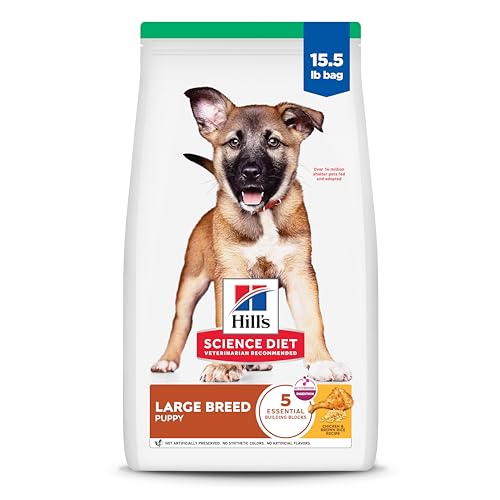
Our two food picks clear this bar in different ways. Purina Pro Plan Large Breed Puppy is our top pick because its formula is aimed at precisely the thing this article is about — supporting an appropriate, controlled growth rate — while adding glucosamine for developing joints and DHA for brain and vision development. Hill's Science Diet Puppy Large Breed leads with balanced mineral levels for growing bones and teeth, plus DHA and an antioxidant blend for the developing immune system; Hill's also describes itself as US veterinarians' #1 recommended brand, though note that's the manufacturer's own claim. As of July 2026, the 34 lb Pro Plan bag runs about $74.98 and the Hill's about $50.99 — compare bag sizes when you compare prices. Full details, pros, and cons are in the product cards below.
Either way, the food is only half the system. The advice in this guide — controlled growth, lean body condition, no calcium supplements — works with any complete large-breed growth formula that carries the right AAFCO statement.
When to Switch a Large-Breed Puppy to Adult Food
Later than the bag of adult food would like. Growth formulas exist to serve the building phase, and big dogs build for a long time. The American Kennel Club's guidance on transitioning by breed size puts large breeds at roughly 12 to 15 months and giant breeds at 18 to 24 months; the biggest breeds are commonly described as still growing until around two years old. Activity level nudges the timing too — a highly active adolescent may benefit from staying on the growth formula a bit longer.
Switching early is the subtle mistake: it moves your puppy off controlled calcium and growth-calibrated calories while the skeleton is still under construction. Watch your weigh-in log — when weight holds flat across several consecutive weeks and your vet agrees growth has plateaued, transition gradually over a week or so by mixing increasing amounts of the adult food into the old formula. We'd pick a large-breed adult formula from the same short list of manufacturers, and confirm the timing at a regular vet visit rather than going by the calendar alone.
The Bottom Line
Large-breed puppy feeding rewards restraint. Pick a food whose AAFCO statement includes large-size growth, measure every meal, keep your puppy lean at a 4–5 body condition score, refuse the calcium supplements, and stay on the growth formula into the second year for the biggest breeds. None of it is expensive and none of it is complicated — it's mostly the discipline to feed a little less than that pleading face requests, on the evidence from Purina's lifetime study, where the lean-fed Labradors lived longer and showed less radiographic hip arthritis than their full-fed littermates.
For the rest of the system — meal frequency by age, portion math, and how to handle food transitions — our puppy feeding guide picks up where this one leaves off.
Our top picks

Purina Pro Plan Large Breed Puppy Food, Chicken and Rice Formula (34 lb)
Greater Goods Wiggle-Proof Digital Pet Scale (44 lb, 0.1 lb precision)
A high-protein, chicken-first formula built around exactly what this article argues for: an appropriate, controlled growth rate for large-breed puppies. It adds glucosamine for developing joints and cartilage, plus DHA from omega-rich fish oil for brain and vision development.
What we love
- Formulated to support a controlled growth rate — the core job of a large-breed puppy food
- Glucosamine for developing joints; DHA from fish oil for brain and vision development
- Real chicken is the first ingredient in a high-protein recipe
Keep in mind
- A 34 lb bag is heavy to pour and needs a proper storage bin
- Chicken-first recipe is a non-starter for chicken-sensitive puppies
Hill's builds this formula around balanced mineral levels for growing large-breed bones and teeth — the calcium control that matters most in this category. DHA and fish oil support brain and eye development, and an antioxidant blend backs the developing immune system.
What we love
- Balanced mineral levels aimed squarely at large-breed bone development
- DHA and fish oil for brain and eye development, plus an antioxidant blend
- Made in the USA
Keep in mind
- Joint-support glucosamine isn't a highlighted feature the way it is in our top pick
- The 'US veterinarians' #1 recommended brand' line is Hill's own marketing claim, not an independent rating
Controlled growth lives or dies on weekly weigh-ins, and this scale makes them painless: 0.1 lb precision, wiggle-proof stabilization that locks in a reading while the puppy squirms, and a paw icon that confirms when it has. The tare function zeroes out a blanket, and the 24 x 11.5 in tray pops off for cleanup.
What we love
- 0.1 lb precision catches week-to-week trends a bathroom scale misses
- Wiggle-proof reading stabilization with a paw icon that shows when weight locks in
- Tare function, removable tray, lb/lb:oz/kg modes, and 5-year product coverage
Keep in mind
- The 44 lb capacity means a large-breed puppy outgrows it within months — after that, weigh-ins happen at the vet
Frequently asked questions
How much should I feed my large-breed puppy?
Start with the feeding chart on your food's bag for your puppy's age and expected adult weight, split into measured meals — veterinary sources, including VCA Animal Hospitals, advise against free-choice feeding for large-breed puppies. Then treat the chart as a starting point, not a rule. Reassess every week or two using body condition: on the 9-point scale WSAVA and the Purina Institute use, aim for a 4 to 5 — ribs you can feel easily, a visible waist from above, a belly tuck from the side. Drifting rounder? Trim portions slightly. Ribs and hips looking sharp? Add a little. Your vet can confirm your scoring at each puppy visit.
Can I feed a large-breed puppy an 'all life stages' food?
Only if the label says it's appropriate for large-breed growth. Look at the AAFCO nutritional adequacy statement in the fine print: a food safe for big puppies will say it meets growth requirements 'including growth of large size dogs (70 lb or more as an adult).' If the statement instead says 'except for growth of large size dogs,' the food's calcium level exceeds what AAFCO allows for large-breed puppies, and it's the wrong choice no matter what the front of the bag promises. When in doubt, a food explicitly formulated and labeled for large-breed puppies removes the guesswork.
Should I give my large-breed puppy calcium supplements for strong bones?
No — this is one of the clearest 'don't' answers in puppy nutrition. Veterinary nutrition sources note that puppies absorb a large share of dietary calcium passively, so a young large-breed puppy can't effectively protect itself against excess, and surplus calcium is one of the two major nutritional risk factors for developmental orthopedic disease, alongside overfeeding. A complete large-breed puppy food already contains calcium inside the range AAFCO sets for large-breed growth. Adding a supplement on top pushes intake past that range and adds risk, not strength. If a breeder or website recommends calcium powder, run it past your veterinarian first.
When should a large-breed puppy switch to adult food?
Later than most owners expect. The American Kennel Club advises that large breeds generally transition somewhere around 12 to 15 months, while giant breeds may stay on a growth formula until 18 to 24 months, because they're still building skeleton well into their second year. Switching early moves your puppy off the controlled calcium and calorie levels a growth formula provides while bones are still forming. Watch for growth to plateau — weight holding steady across several weekly weigh-ins is a good sign — and confirm timing with your vet, especially for mixed breeds whose adult size is a guess.
About the author
James Martin
I'm an animal lover through and through. I grew up with dogs, my family always had at least one pet, and today I share my home with a rescue who is the love of my life. I started Healthy Puppy Review to help owners cut through the marketing noise and make confident, well-researched choices about their dog's health and happiness.